








The North News
Chandigarh, January 16
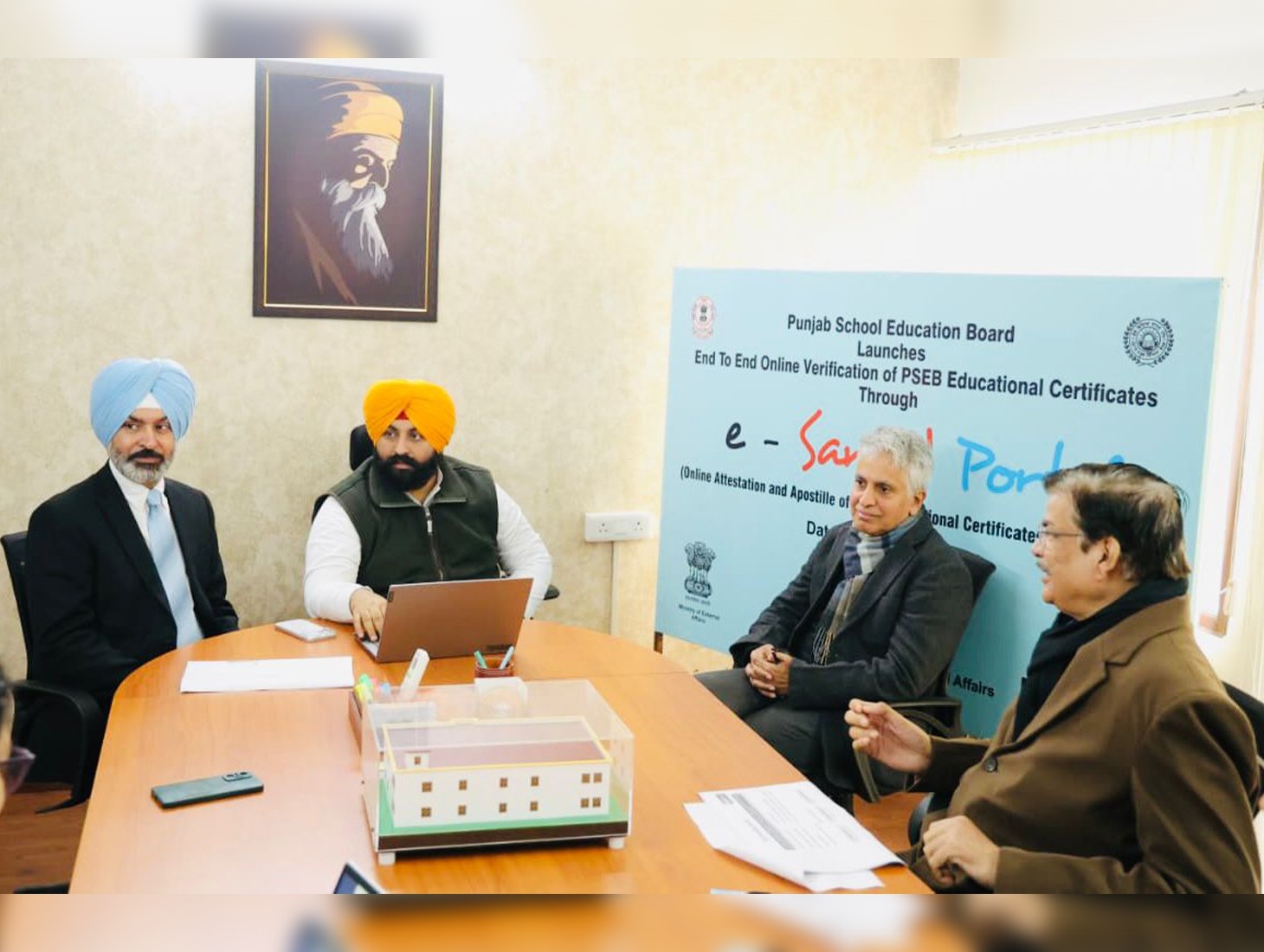
The long queues and paperwork that once defined the verification of educational certificates in Punjab are set to become a thing of the past. On Monday, the state government led by Bhagwant Singh Mann launched E-Sanad, a fully digital platform for the verification and authentication of academic documents, making Punjab only the second state in India to introduce the reform.
The new system allows students and alumni of the Punjab School Education Board (PSEB) to get mark sheets and certificates verified online within days — a process that earlier took 40 to 45 days and often required repeated visits to offices. The government says the move will benefit thousands of PSEB pass-outs each year, particularly those seeking to study or work abroad. Launching the service, Education Minister Harjot Singh Bains said the initiative reflected a broader push towards digital governance and citizen-centric service delivery. He added that the reform would also enhance the global credibility of certificates issued by the board.
Nearly 300,000 students pass out from PSEB-affiliated schools every year, along with a large number of former students who require document verification for higher education, employment or professional purposes overseas. Under the E-Sanad system, certificates are digitally verified against PSEB records before being authenticated by India’s Ministry of External Affairs.
The service covers both Hague Convention countries, through apostille, and non-Hague countries, through standard MEA attestation, with embassy verification where required. According to Mr Bains, this has reduced verification timelines to just a few days, bringing greater efficiency and transparency to a process that was long criticised as slow and cumbersome.
PSEB chairman Dr Amarpal Singh said the entire application process is online and paperless, with detailed instructions and payment facilities available on the board’s official website. Applicants, he said, will not be required to visit the PSEB head office at any stage.
For students planning futures beyond India, the reform promises not just speed, but a quiet reshaping of how the state interacts with its young citizens — fewer forms, fewer queues, and a system designed to move at the pace of their ambitions.