








 Dr Kiran Deep
Chandigarh, April 3
Punjab has launched a broad, pre-emptive drive to contain dengue, malaria, rabies and a range of other seasonal illnesses before transmission rates climb, with senior ministers calling for a sharper and more coordinated response across the state.
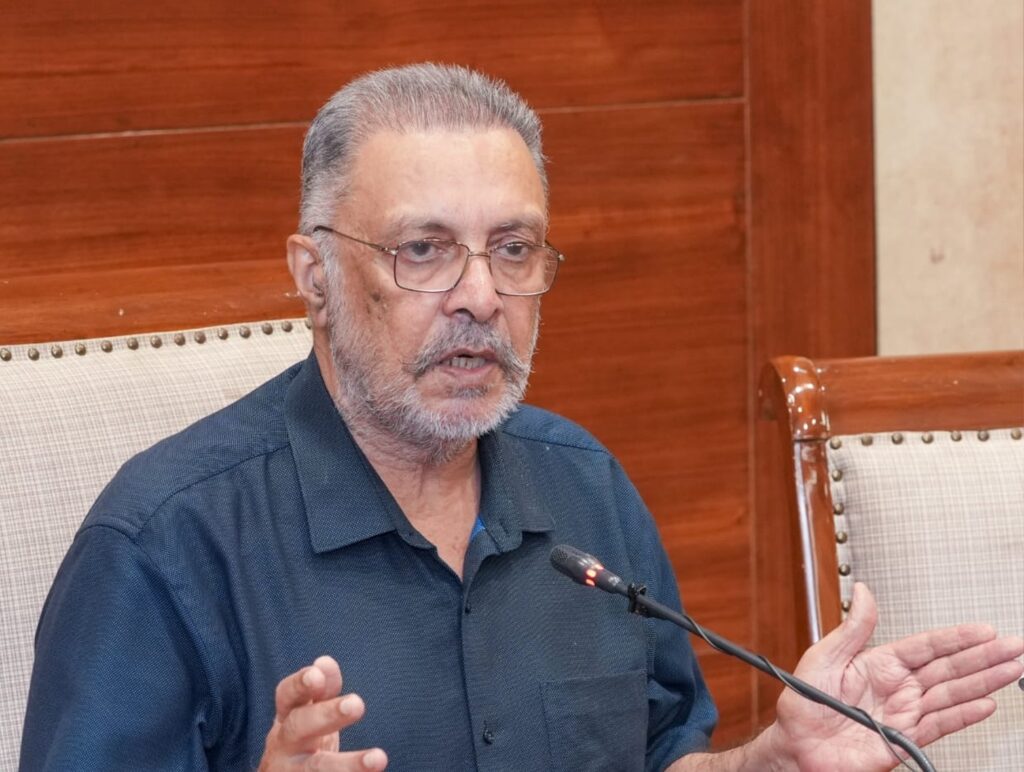
Senior ministers gathered in Chandigarh on Friday for a high-level State Task Force meeting, where Health Minister Dr Balbir Singh and Finance and Transport Minister Harpal Singh Cheema reviewed the state’s readiness to deal with vector-borne, water-borne and zoonotic diseases in the months ahead.
Dr Balbir Singh said Punjab would adopt a “One Health” framework — an integrated model that brings together human, animal and environmental health systems under a single coordinated response. The approach is intended to address threats ranging from dengue and malaria to chikungunya, rabies and leptospirosis.
He said the state had widened its diagnostic reach, with free ELISA tests for dengue and chikungunya now accessible at 47 sentinel surveillance hospitals. Rapid malaria testing and dengue diagnostics have also been extended to all Aam Aadmi Clinics across the state.
The minister pointed to measurable progress in the fight against dengue over recent years. Confirmed cases fell sharply from more than 23,000 in 2021 to just under 5,000 in 2025, while fatalities dropped from 55 to eight over the same period.
He attributed the improvement to sustained surveillance efforts, including door-to-door inspections and approximately 15 million household visits carried out during the last transmission season.
However, he cautioned against complacency, noting a shift in the disease’s geography. In 2025, nearly 42% of dengue cases were recorded in rural areas — a significant rise that has prompted the state to extend fogging operations, larvicidal spraying in village ponds and the deployment of Gambusia fish as a natural mosquito control measure beyond urban centres.
Dr Balbir Singh called for intensified efforts under the state’s weekly “Har Shukarvaar Dengue Te Vaar” campaign, held every Friday morning, urging schools and local communities to actively identify and eliminate mosquito breeding sites such as water coolers, flower pots and overhead tanks.
On the question of animal-transmitted diseases, the minister said anti-rabies vaccines were now stocked at 746 government health facilities across Punjab. He pressed departments to accelerate the establishment of district-level Animal Birth Control centres, aimed at building stronger protection within the stray dog population.
Private medical practitioners were also urged to report notifiable diseases promptly through the Integrated Health Information Platform so that potential outbreaks could be identified and contained without delay.
Concerns over water-borne illnesses were also on the agenda. The minister directed local government bodies and water supply departments to ensure consistent chlorination of drinking water and regular quality testing — particularly in areas considered vulnerable to outbreaks of hepatitis A, hepatitis E, diarrhoea and cholera.
He made specific reference to a recent leptospirosis outbreak in Hazara Singh Wala village in Ferozepur district, saying he intended to visit the area personally alongside the local administration to assess the situation and develop standardised procedures for handling similar incidents in future.
Harpal Singh Cheema reaffirmed the government’s commitment to backing the public health campaign, and revealed that Punjab Roadways and state transport workshops had been instructed to clear old tyres and discarded vehicle parts — materials that collect stagnant water and serve as breeding grounds for mosquitoes.
He called on all departments to sustain the current momentum and expressed the government’s ambition of making Punjab free of preventable diseases by the end of 2026.
Chandigarh, September 28 Punjab Vidhan Sabha Speaker Kultar Singh Sandhwan paid tribute to revolutionary freedom…

Protest held at Patiala’s Phuhara Chowk as part of statewide demonstrations against alleged irregularities during…
Qaumi Insaaf Morcha announces two-day march to Takht Sri Damdama Sahib, seeks release of Sikh…
DGP says CCTV analysis underway to identify those involved in violence Punjab, September 28 Punjab…