








 The North News
The North News
New Delhi, December 12
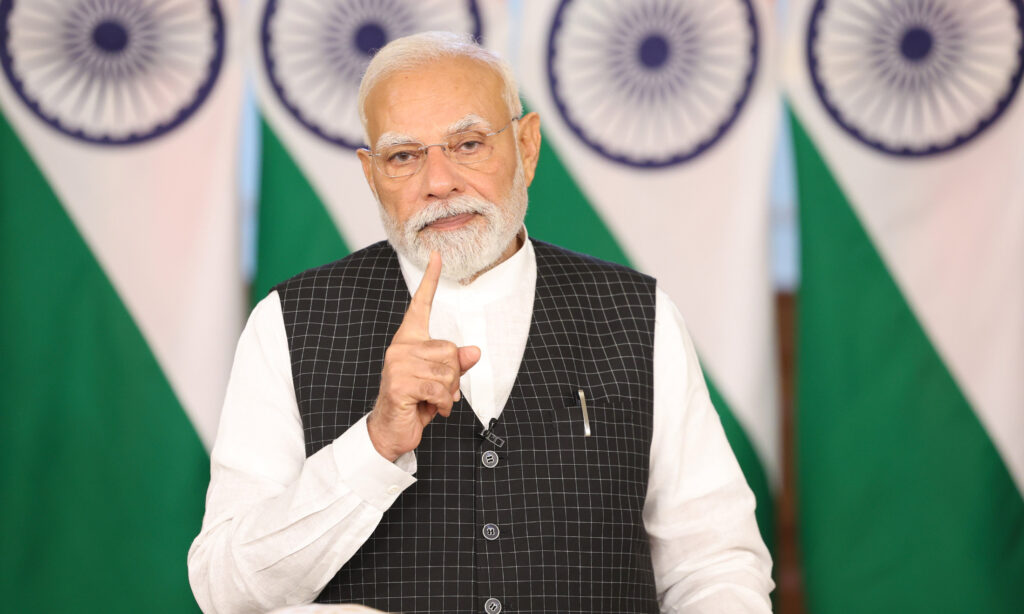
India is preparing to launch its most ambitious population count yet, after the Union Cabinet, chaired by Prime Minister Narendra Modi, approved funding of ₹11,718.24 crore for the 2027 Census — an exercise officials describe as the largest administrative and statistical operation anywhere in the world. The Census will be conducted in two phases: houselisting and housing data collection between April and September 2026, followed by population enumeration in February 2027. In Ladakh, and the snow-bound areas of Jammu & Kashmir, Himachal Pradesh and Uttarakhand, enumeration will take place earlier, in September 2026, to avoid weather-related disruptions.
Nearly 30 lakh field workers — many of them government school teachers — will fan out across the country, visiting every household and filling out two distinct questionnaires. They will do this in addition to their regular duties, supported by layers of census staff at sub-district, district and state levels.
For the first time, the entire operation will be digital. Enumerators will collect information through mobile apps on Android or iOS devices, while a new Census Management & Monitoring System will allow authorities to track progress in real time. A separate digital tool, the Houselisting Block Creator, will help officers map and organise census blocks. Citizens will also have the option to self-enumerate — a major shift in the country’s approach to population data collection.
The shift to digital methods will allow results to be published faster and in more accessible formats. A “Census-as-a-service” model promises ministries and policymakers clean, machine-readable datasets at the click of a button, enabling decisions based on more granular, village- and ward-level information.
The 2027 exercise is expected to have significant employment implications as well. Around 18,600 technical personnel will be hired for nearly 550 days, adding up to more than one crore man-days of work. Officials say the emphasis on digital tools could leave a legacy of local-level capacity building, particularly in data handling and technological coordination.
Crucially, this will also be India’s first Census to include caste enumeration in nearly a century. The Cabinet Committee on Political Affairs approved the addition in April 2025, citing the country’s vast social diversity and the need for more detailed demographic insight. Caste data will be collected during the population enumeration phase.
This will be the 16th Census since the exercise began in 1872, and the eighth since independence. The data produced — on housing, amenities, assets, education, language, economic activity, migration, fertility and more — forms the backbone of India’s planning and welfare architecture. The work is governed by the Census Act of 1948 and Census Rules of 1990, which mandate confidentiality and outline the responsibilities of census personnel.
Six states sign Rs 15,624-crore pact; Delhi, Haryana and Rajasthan to bear state’s estimated power-component…

Did information allegedly held by Sushant Singh Rajput’s former manager about drug trafficking, child abuse…

New Delhi, September 14 Improving political, diplomatic and military engagement between India and China…

Chandigarh, September 14 Prime Minister Narendra Modi on Monday congratulated the Indian women’s cricket team…