








New Delhi, March 12
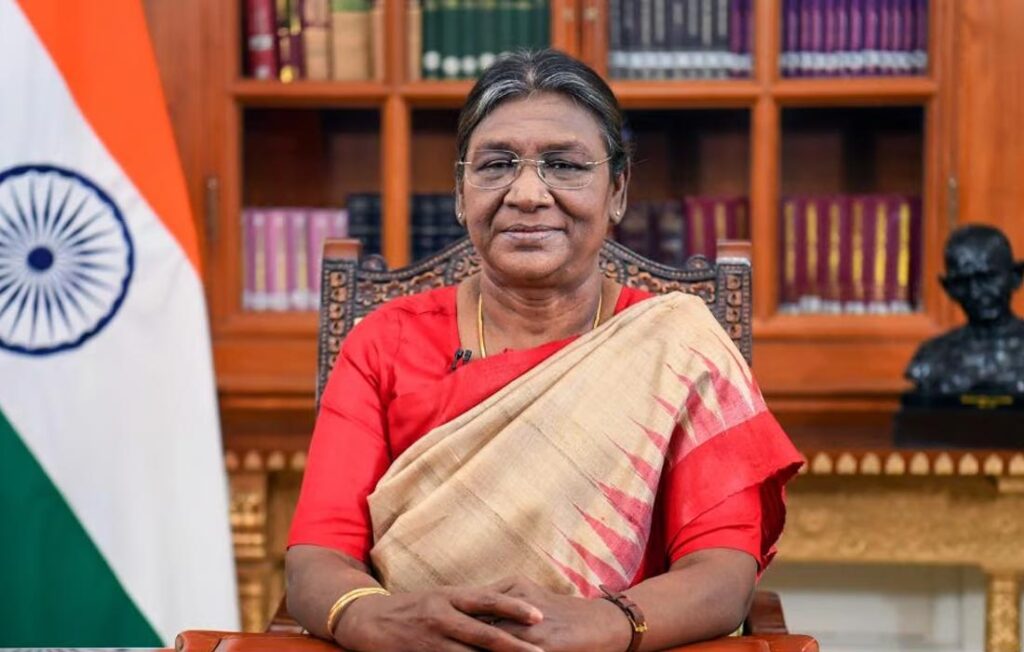
President Droupadi Murmu on Thursday said women engaged in agriculture and agri-food sectors should get a greater role in policy formation, decision-making and leadership positions, and called for collective action to close gender gaps across the value chain.
Addressing the three-day Global Conference on Women in Agri-Food Systems, the President said success case studies on women in agriculture should be published widely to ensure more people were aware of their contributions.
Emphasising India’s strategic choice of women-led development, Murmu said women in the agriculture sector must be given a greater role in policy formulation, decision-making, and leadership positions.
“Larger participation of women at all levels in the sector will promote gender-inclusive agricultural growth,” she said.
She called for targeted support for women farmers on issues of land titles, access to technical knowledge, and institutional finance.
On the role of technology, Murmu highlighted ‘Sarlaben’ — an AI-powered initiative inspired by the government’s livestock care vision — as an example of how artificial intelligence is opening new possibilities for women farmers.
Noting that the government had conferred Padma Shri awards on women farmers from Tamil Nadu, Maharashtra, Odisha, and Bihar, Murmu said the next generation should draw inspiration from these trailblazers to contribute meaningfully to the farm sector.
The President welcomed the UN’s declaration of 2026 as the International Year of Women Farmers, describing it as a call for “collective action to close gender gaps and promote leadership roles for women across the agri-food value chain”.
The President cited a series of central government initiatives from the past decade that have sought to economically empower women in agriculture.
The Jan Dhan Yojana, the world’s largest financial inclusion programme, now has 570 million bank accounts, of which 56 per cent are held by women. Women also constitute 68 per cent of all Mudra loan beneficiaries, reflecting the reach of India’s digital public infrastructure.
Under the Deendayal Antyodaya Yojana — National Rural Livelihoods Mission (DAY-NRLM) — over 10 crore rural households and 90 lakh self-help groups (SHGs) have been mobilised, making it one of the world’s largest women-led community initiatives.
More than 4.6 crore women farmers under this mission have received support for adopting improved farming practices.
The Namo Drone Didi scheme provides drones to women SHGs for precision agriculture. The National Rural Livelihood Mission has set a target of creating 6 crore Lakhpati Didis — women earning over Rs 1 lakh annually — of whom more than 3 crore have already achieved that status.
The 2025-26 Union Budget has also introduced SHE Marts (Self-Help Entrepreneur Marts) community-owned retail outlets in every district dedicated to marketing products made by SHGs and rural enterprises — to provide women in agriculture and allied sectors better market access.
Closing her address, Murmu invoked the global framework of people, planet, prosperity, peace, and partnership, urging all stakeholders to make gender a special priority in both thought and action.
“With effective gender inclusion in every sphere of activity, including agriculture, we will not only achieve the SDGs but will also make the planet a much more sensitive and harmonious place,” she said.
Agriculture Minister Shivraj Singh Chouhan, ICAR Director General M L Jat, Trust for Advancement of Agricultural Sciences (TAAS) founder Chairman R S Paroda, Protection of Plant Varieties and Farmers Rights Authority (PPVFRA), Chairperson Trilochana Mohapatra among others were present at the event.
The three-day event focuses on sharing inspiring success stories of women leaders and scientists; integrating gender-sensitive approaches into agricultural policies and institutions; examining entrepreneurship, financial models, and market linkages to strengthen women’s roles in value chains.
It will also deliberate on digital tools, climate-smart innovations, and women-friendly technologies designed to boost productivity and reduce drudgery.
PTI