








Rahul Chawla
Dharamshala, April 3
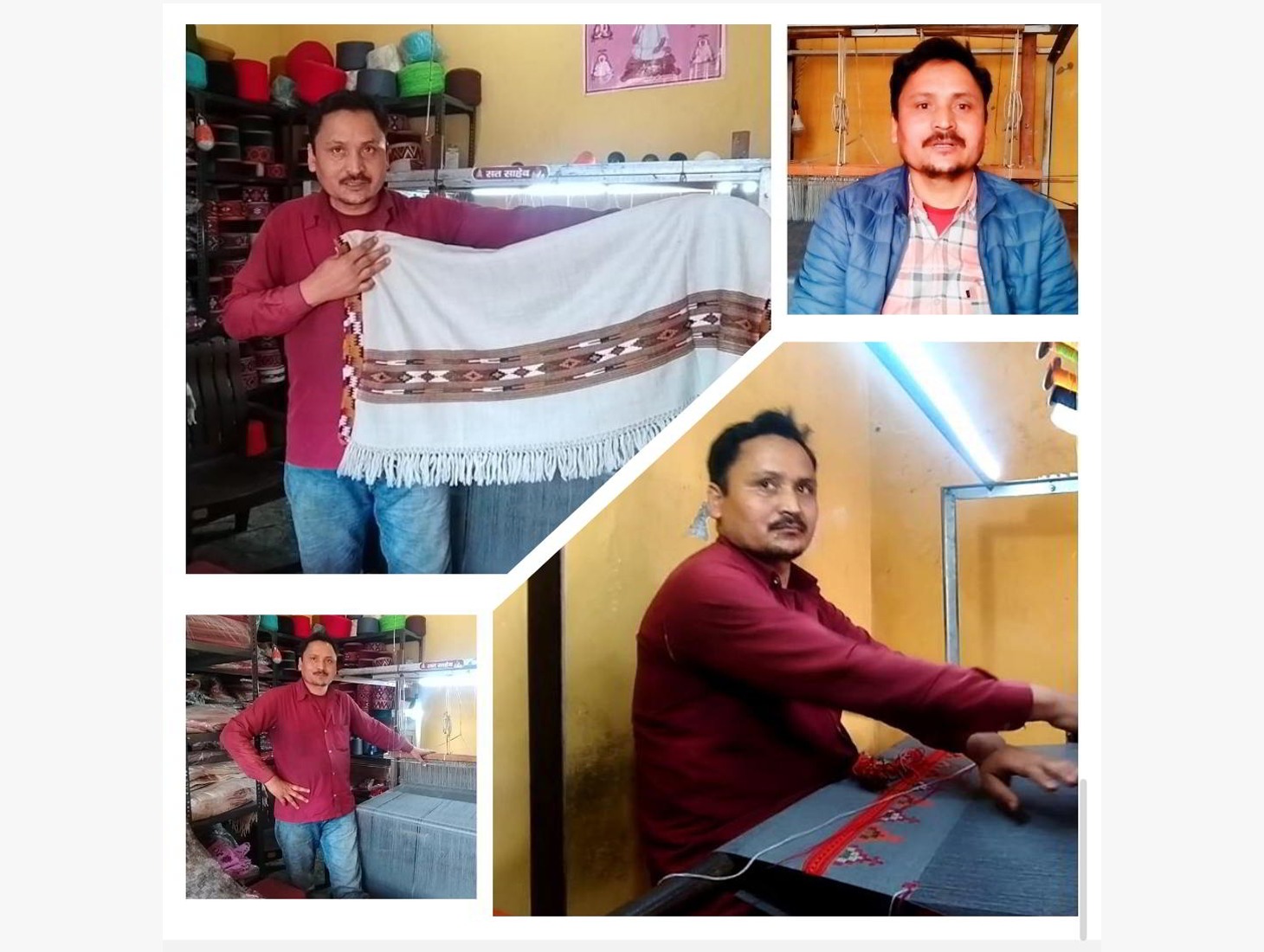
At a time when traditional handloom crafts are steadily fading from rural areas, a weaver from Himachal Pradesh’s Kangra district is working to preserve the age-old art of shawl weaving. Ramlal, a resident of Darati village in Palampur tehsil, has been associated with traditional shawl weaving for nearly 35 years. Despite limited financial resources, he has continued to practice and promote the craft, which was once a major source of livelihood for many rural families.
Speaking about his journey, Ramlal said he had to start working at a young age due to poor financial conditions at home. He decided to learn shawl weaving and began his training at the Devbhoomi Spinning Fair in Kullu, where he learned the basics of the craft.
Over the years, he worked at different places and gained experience from skilled craftsmen, eventually mastering traditional weaving techniques, designs and patterns.
Ramlal also spent nearly two years training young people and women in a company in Chamba. He said many of the people he trained are still earning their livelihood through shawl weaving.
After leaving the company, he resumed the work independently and continues to produce shawls and woollen fabrics using traditional methods.
According to Ramlal, shawl weaving is a lengthy and labour-intensive process. It involves multiple stages, including cleaning the wool, preparing the yarn, dyeing, weaving, and designing. He said it can take several days to complete a single shawl, which generally requires around five to six metres of fabric.
He is known for preparing shawls in traditional Kullu and Kinnauri designs and also makes fabric for suits in different patterns. Ramlal said handwoven shawls made using traditional methods are sold in the market for around Rs 14,000 to Rs 15,000.
Ramlal said he wants to ensure that the traditional craft survives for future generations. He plans to set up a small training centre with two to four machines to train unemployed youth from nearby villages and provide them with employment opportunities.
He said the wool used in making the shawls is mainly sourced from Kullu. While some products are sold locally, the remaining stock is supplied to shawl traders.
Ramlal added that he also wants to work on new designs and patterns, alongside traditional styles, and hopes to pass this skill on to the next generation.