








The North News
New Delhi, March 13
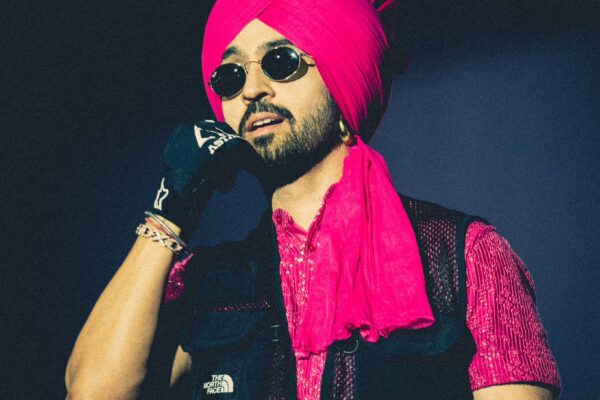
Punjabi singer-actor Diljit Dosanjh has long occupied a rare space in contemporary music: a homegrown star with deep roots in regional sound, and an artist increasingly fluent in the language of global pop. With Ranjha, his latest single with Australian singer Sia and French DJ-producer David Guetta, he pushes that crossover further — not by abandoning his musical identity, but by widening its frame.
Released by Warner Music India, Ranjha is pitched as a meeting point of worlds. There is the unmistakable emotional pulse of Punjabi folk, but also the sheen of international pop and the euphoric lift of electronic dance music. It is a song built for playlists and festival sets, but also one that tries to hold on to the warmth and ache often associated with Punjabi romantic expression.
That balancing act has increasingly defined Dosanjh’s global rise. Already one of the most recognisable names in Punjabi entertainment, he has, over the past few years, transformed himself into a transnational figure — the kind of artist equally at ease on Punjabi charts, global streaming platforms and international stages. Songs such as GOAT, Born To Shine and Lover helped turn him from a regional superstar into a widely visible cultural export.
With Ranjha, that arc becomes more explicit.
“Ranjha carries that Punjabi heart but opens up to the world in a big way,” Dosanjh said, describing the song as both emotionally rooted and sonically expansive.
His collaboration with Sia feels especially significant. Known for emotionally charged, stadium-sized pop anthems such as Cheap Thrills and Chandelier, Sia brings a voice that is instantly recognisable, but also one that has often thrived in songs that combine vulnerability with maximalist production.
Guetta, meanwhile, is almost synonymous with that kind of scale. Across the last two decades, he has helped shape mainstream EDM with tracks such as Titanium, When Love Takes Over, Without You and Memories — songs engineered not merely to be heard, but to be felt in crowds.
For him, Ranjha emerged from a simple shared instinct.
“This track has melody, rhythm, and attitude — everything I’m drawn to as a producer,” he said.
“We wanted to make something people could just press play on and feel instantly” he added.
PTI inputs