


The North News
Chandigarh, March 6
In a major relief for households, businesses and industries across Punjab, electricity tariffs have been reduced across consumer categories for FY 2026–27, bringing down power rates by up to ₹1.5 per unit for domestic consumers, up to 79 paise per unit for commercial users and up to 74 paise per unit for industrial units.
The new tariff order, issued by the Punjab State Electricity Regulatory Commission chaired by Viswajeet Khanna, IAS (Retd.), along with Members Ravinder Singh Saini (Member Technical) and Ravi Kumar (Member Legal), will come into effect from April 1, 2026 to March 31, 2027.
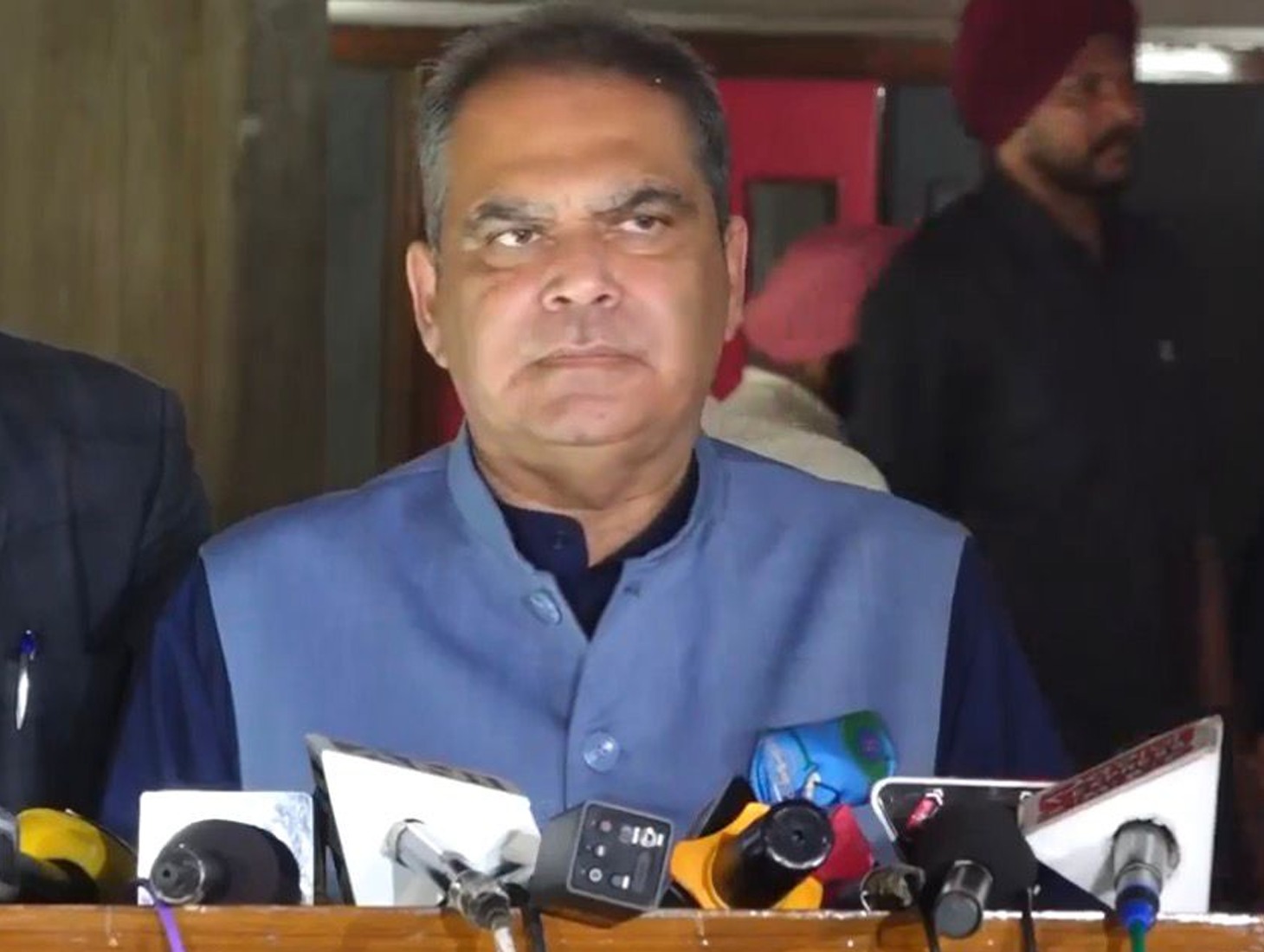
Highlighting the development as a major pro-people step, Power Minister Sanjeev Arora said the tariff reductions across categories will provide substantial relief to households, strengthen MSMEs and boost industrial competitiveness in Punjab. He added that the reduction of EV charging tariff to ₹5 per unit, among the lowest in the country, along with the financial turnaround of Punjab State Power Corporation Limited (PSPCL), which has secured an A+ rating and recorded a ₹2634 crore profit, reflects the growing efficiency and strength of Punjab’s power sector under the leadership of CM Bhagwant Singh Mann.
The revised tariff structure brings down electricity rates across consumer categories while maintaining the financial strength of the power sector. Domestic consumers will see reductions of up to ₹1.5 per unit depending on consumption slabs, commercial establishments will benefit from reductions of up to 79 paise per unit, and industrial consumers will see tariffs reduced by up to 74 paise per unit.
During a media interaction, Power Minister Sanjeev Arora stated, “Under the leadership and guidance of Arvind Kejriwal and Chief Minister Bhagwant Singh Mann, the Punjab Government has ensured that electricity tariffs remain consumer-friendly while also supporting industrial growth and economic development in the State.”
Highlighting the benefits for domestic consumers, Sanjeev Arora said that households will continue to receive substantial support through the Punjab Government’s flagship free electricity initiative. “300 units of electricity per month, which translates to 600 units per billing cycle, remain completely free for households. More than 90% of households in Punjab are already benefiting from the free electricity scheme introduced by the Bhagwant Singh Mann Government,” said Minister Sanjeev Arora.
He added that even for households consuming beyond the free quota, tariffs have been reduced. “For consumption above 300 units, the tariff has been reduced by ₹0.70 per unit, providing additional relief to higher-consumption households,” said Minister Sanjeev Arora.
The Punjab Government has also reduced fixed charges for domestic consumers. For households with a load between 2 kW and 7 kW, fixed charges have been reduced by ₹5 per kW, while for loads between 7 kW and 20 kW, fixed charges have been reduced by ₹10 per kW.
Commercial consumers will also benefit significantly from the revised tariff structure
“For commercial consumers with load up to 7 kW, tariffs have been reduced by ₹0.79 per unit for consumption up to 500 units and by ₹0.65 per unit for consumption above 500 units,” said Minister Sanjeev Arora.
He added that for commercial connections with a load between 7 kW and 20 kW, fixed charges have been reduced by ₹10 per kW per month, while energy charges have been revised to ₹6.10 per unit for consumption up to 500 units and ₹7.10 per unit for consumption above 500 units.
The Punjab Government has also ensured stability and competitiveness for the industrial sector
“For the industrial sector, energy charges have not been increased for FY 2026-27. In addition, fixed charges for industrial connections have been reduced,” said Minister Sanjeev Arora.
He explained that for industrial connections with load up to 50 kW, fixed charges have been reduced by ₹10 per kW per month, while for connections between 50 kW and 100 kW, fixed charges have been reduced by ₹15 per kW per month. “These measures will improve cost competitiveness for industry and strengthen the growth of MSMEs across Punjab,” said Minister Sanjeev Arora.
In another important decision aimed at providing relief to professionals, electricity connections in lawyers’ chambers registered with the Bar Council of Punjab and Haryana and located in court complexes will now be charged under domestic tariff instead of commercial tariff.
The tariff order also records that operational efficiencies in the power sector have enabled an overall consumer relief of ₹7851.91 crore while maintaining financial sustainability.
The development also reflects the financial turnaround of Punjab State Power Corporation Limited (PSPCL) under the Bhagwant Mann Government. The order notes that the regulatory framework and financial discipline in the power sector have enabled PSPCL to become an efficient and profit-generating power utility. PSPCL has secured an A+ rating and recorded a profit of ₹2634 crore in the financial year ending March 31, 2025.
Another major highlight of the tariff order is the reduction in the average cost of electricity supply in Punjab. The average cost has declined to ₹6.15 per unit compared to ₹7.15 per unit in the previous year, making it the lowest average electricity cost in the last ten years.
The tariff order also provides a major push to clean mobility by reducing the electricity tariff for EV charging stations to ₹5 per unit, placing Punjab among the states with the lowest EV charging tariffs in the country.
In addition, the Commission has introduced several consumer-friendly measures including increasing the applicable limit for the Small Power category from 20 kW to 50 kW to promote ease of doing business, continuation of special night tariff benefits for industrial consumers, and a reduction in the green energy tariff to encourage greater adoption of renewable energy by industries.
The PSPCL to focus on further improving operational efficiency and financial performance. Key targets include reducing distribution losses by around 20%, lowering power purchase costs through improved planning and procurement, and increasing the integration of renewable and green energy in the power mix. These steps will further strengthen the financial health of PSPCL, reduce subsidy dependence over time and ensure reliable, affordable and sustainable electricity supply for the people of Punjab.
Reiterating its commitment to public welfare and economic growth, Minister Sanjeev Arora stated that it will continue working towards providing affordable, reliable and sustainable electricity while supporting industrial growth and investment in Punjab.
Big relief for electricity consumers in Punjab
Electricity tariffs for FY 2026–27.
Domestic Consumers
- 300 units/month remain FREE (over 90% households benefit)
- Up to 300 units: ₹5.40 ➝ ₹3.85 per unit (₹1.55 relief)
- Above 300 units: ₹7.75 ➝ ₹7.05 per unit (₹0.70 relief)
Commercial Consumers
- Up to 500 units: ₹6.89 ➝ ₹6.10 per unit (₹0.79 relief)
- Above 500 units: ₹7.75 ➝ ₹7.10 per unit (₹0.65 relief)
Industrial Consumers
- Small industry: ₹5.82 ➝ ₹5.70 per unit
- Medium industry: ₹6.25 ➝ ₹5.83 per unit
- Large industry: ₹6.60 ➝ ₹5.90 per unit
- Relief up to ₹0.74 per unit
EV Charging Stations
- ₹6.28 ➝ ₹5 per unit
- Among the lowest EV charging tariffs in India
Other Key Benefits
- ₹7851 crore relief to consumers
- Average electricity cost reduced to ₹6.15/unit (lowest in 10 years)
- PSPCL profit ₹2634 crore with A+ rating