


The North News
New Delhi, March 17
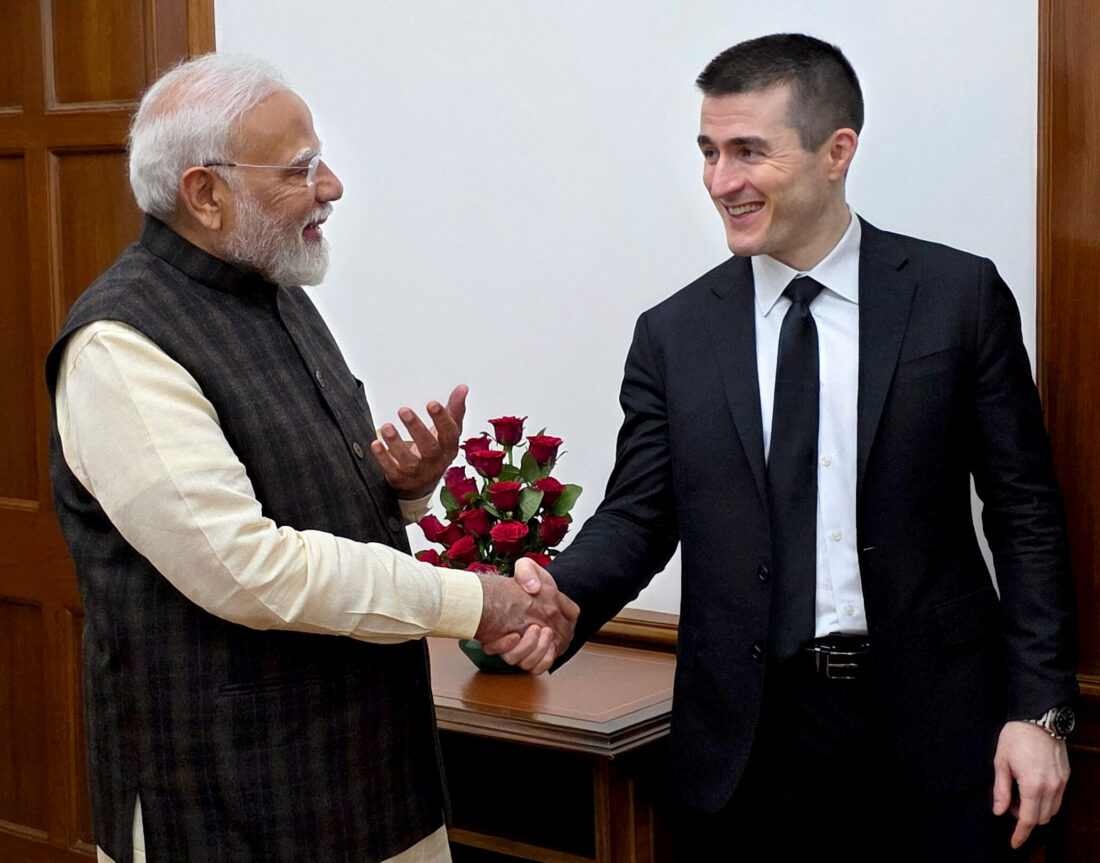
Prime Minister Narendra Modi joined Lex Fridman for a wide-ranging podcast discussion, touching on philosophy, discipline, and personal habits. In a candid exchange, Prime Minister Modi spoke about the significance of fasting in his life, calling it a means of achieving balance and heightened awareness.
Acknowledging Fridman’s gesture of fasting in solidarity, Modi expressed gratitude, emphasizing that religious traditions in India are deeply woven into daily life. He highlighted that Hinduism is not just a set of rituals but a guiding philosophy, a perspective affirmed by India’s Supreme Court. Fasting, he explained, serves as a tool for self-discipline and sharpening the senses.
The conversation offered a rare personal glimpse into the Prime Minister’s approach to well-being and spirituality.
He observed that during fasting, one can perceive even subtle aromas and details more vividly. He also highlighted that fasting accelerates the thinking process, providing fresh perspectives and encouraging out-of-the-box thinking. Modi clarified that fasting is not just about abstaining from food; it involves a scientific process of preparation and detoxification. He emphasized that he prepares his body for fasting by following ayurvedic and yoga practices for several days beforehand and stressed the importance of hydration during this period.
Once fasting begins, he views it as an act of devotion and self-discipline, allowing for deep introspection and focus. The Prime Minister shared that his practice of fasting originated from personal experience, starting with a movement inspired by Mahatma Gandhi during his school days. He felt a surge of energy and awareness during his first fast, which convinced him of its transformative power. He highlighted that fasting does not slow him down; instead, it often increases his productivity. He noted that during fasting, his thoughts flow more freely and creatively, making it an incredible experience for expressing himself.
On being asked how he carried out his role as a leader on the world stage, all fasted, and sometimes nine days, Modi highlighted the ancient Indian tradition of Chaturmas, observed during the monsoon season when digestion naturally slows. He remarked that during this period, many Indians follow the practice of consuming only one meal a day. For him, this tradition begins around mid-June and continues until after Diwali in November, spanning four to four and a half months. He added that during the Navratri Festival in September or October, which celebrates strength, devotion, and spiritual discipline, he completely abstains from food and consumes only hot water for nine days. He further shared that during the Chaitra Navratri in March or April, he follows a unique fasting practice by consuming only one specific fruit once a day for nine days. For instance, if he chooses papaya, he eats only papaya throughout the fasting period. He emphasized that these fasting practices are deeply ingrained in his life and have been followed consistently for 50 to 55 years.
The Prime Minister remarked that his fasting practices were initially personal and not publicly known. However, they became more widely recognised after he became Chief Minister and Prime Minister, he added noting that he does not mind sharing his experiences now, as they might be beneficial to others, aligning with his life’s dedication to the well-being of others. He also shared an instance during a bilateral meeting at the White House with former President of USA, Barack Obama when he was fasting.
On being asked about his early life, the Prime Minister reflected on his birthplace, Vadnagar, Mehsana district in North Gujarat, highlighting its rich historical significance. He noted that Vadnagar was a major center for Buddhist learning, attracting figures like the Chinese philosopher Hiuen Tsang. He mentioned that the town was also a prominent Buddhist educational hub around the 1400s, highlighting that his village had a unique environment where Buddhist, Jain, and Hindu traditions co-existed harmoniously. He emphasized that history was not confined to books, as every stone and wall in Vadnagar told a story.
During his tenure as Chief Minister, he initiated large-scale excavation projects that uncovered evidence dating back 2,800 years, proving the city’s continuous existence. Shri Modi remarked that these findings have led to the establishment of an international-level museum in Vadnagar, which is now a major area of study, especially for archaeology students. He expressed gratitude for being born in such a historically significant place, seeing it as his good fortune. The Prime Minister also shared aspects of his childhood, describing his family’s life in a small house without windows, where he grew up in extreme poverty. However, he added that they never felt the burden of poverty, as they had no basis for comparison. His father was disciplined and hardworking, known for his punctuality, he said. Modi highlighted his mother’s hard work and her spirit of caring for others, which instilled in him a sense of empathy and service. He recalled how his mother would treat children with traditional remedies early in the morning, gathering them at their home, and emphasized that these experiences shaped his life and values.
The Prime Minister noted that his journey into politics brought his humble beginnings to light, as media coverage during his oath-taking as Chief Minister revealed his background to the public. He expressed that his life’s experiences, whether seen as fortune or misfortune, have unfolded in a way that now informs his public life.
Modi encouraged young people to remain patient and self-confident, emphasizing that challenges are part of life but should not define one’s purpose, when asked for his advice to the young people. He highlighted that difficulties are tests of endurance, meant to strengthen individuals rather than defeat them, adding that every crisis presents an opportunity for growth and improvement. The Prime Minister remarked that there are no shortcuts in life, using the analogy of railway station signs that warn against crossing tracks, stating, “Shortcut will cut you short.” He emphasized the importance of patience and perseverance in achieving success. He also stressed the need to pour one’s heart into every responsibility and live life with passion, finding fulfillment in the journey. Highlighting that abundance alone does not guarantee success, as even those with resources must continue to grow and contribute to society, the Prime Minister emphasized the importance of never stopping learning, as personal growth is essential throughout life.
He shared his own experience of learning from interactions at his father’s tea shop, which taught him the value of continuous learning and self-improvement. He noted that many people set big targets and feel disappointed if they fall short. He advised focusing on doing something rather than just becoming something, as this mindset allows for continued determination and progress toward goals. He emphasized that true contentment comes from what one gives, rather than what one gets, and encouraged young people to cultivate a mindset centered on contribution and service.
On being asked about his journey in the Himalayas, Modi reflected on his upbringing in a small town, where community life was central. He often visited the local library, finding inspiration in books about figures like Swami Vivekananda and Chhatrapati Shivaji Maharaj. This sparked a desire to shape his life similarly, leading him to experiment with his physical limits, such as sleeping outside in cold weather, to test his endurance, he added.
Highlighting the influence of Swami Vivekananda’s teachings, particularly a story where Vivekananda, despite needing help for his ill mother, could not bring himself to ask Goddess Kali for anything during meditation, an experience which instilled in Vivekananda a spirit of giving, Modi said that this left an impression on him, stressing that true contentment comes from giving and serving others.
He recalled an incident where he chose to stay behind and care for a saint during a family wedding, demonstrating his early inclination towards spiritual pursuits. He noted that seeing soldiers in his village inspired him to serve the nation, though he didn’t have a clear path at the time. The Prime Minister mentioned his deep longing to understand life’s meaning and his journey in exploring it. He highlighted his connection with saints like Swami Atmasthanandji, who guided him on the importance of serving society. He shared that during his time in the mission, he met remarkable saints who showered him with love and blessings. Modi also spoke about his experiences in the Himalayas, where solitude and encounters with ascetics helped shape him and discover his inner strength. He emphasized the role of meditation, service, and devotion in his personal growth.
Sharing his experience with Swami Atmasthanandaji in Ramakrishna Mission which led him to a decision to live a life of service at every scale, Shri Modi said that while others may view him as the Prime Minister or Chief Minister, he remains deeply committed to spiritual principles, highlighting that his inner consistency is rooted in serving others, whether through helping his mother care for children, wandering in the Himalayas, or working from his current position of responsibility. The Prime Minister remarked that to him, there is no real difference between a saint and a leader, as both roles are guided by the same core values. He emphasized that while external aspects like attire and work may change, his dedication to service remains constant. He underlined that he carries out every responsibility with the same sense of calm, focus, and dedication.