









The North News
New Delhi/Hyderabad, November 26
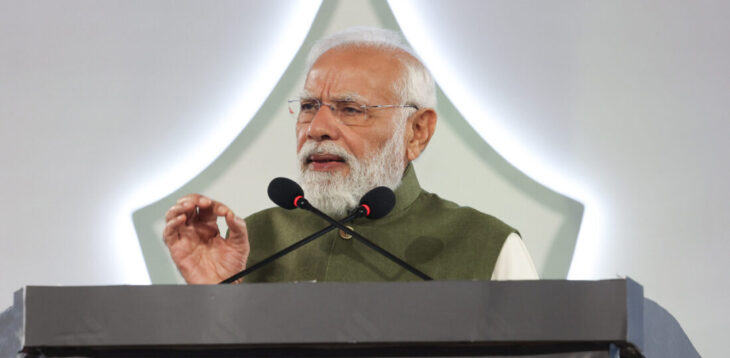
Prime Minister Narendra Modi on Thursday praised the role of India’s Gen Z in emerging sectors such as fintech, agritech, healthtech and defensetech, describing them as a source of inspiration for their peers around the world. In remarks delivered at an event, Modi said he was “fully confident” that if the “JNG”—a term he used to refer to the next generation—were seeking real-world inspiration, “they would find it in India’s JNG”.
Highlighting India’s booming space startup landscape, Modi said more than 300 young companies — many beginning in rented rooms with small teams — are now designing propulsion systems, rocket stages, composite materials and satellite platforms. “This spirit has given birth to the private space revolution in India,” he said, adding that global investors are increasingly drawn to the sector.
He drew a contrast between what he called the constructive mindset of India’s youth and unrest in several parts of the world, arguing that young Indians were focused on innovation, capacity building and global citizenship. The Prime Minister added that This outlook had positioned India’s new generation as a model for others during a period of rapid technological and economic change.
While inaugurating Skyroot Aerospace’s new Infinity Campus in Hyderabad through video conferencing, Prime Minister Modi said India is witnessing an “unprecedented opportunity” in the space sector, with private players taking a decisive leap. “Skyroot’s Infinity Campus reflects India’s new thinking, innovation and youth power,” he said, adding that the country is on track to become a global leader in satellite launches.
Modi praised Skyroot founders Pawan Kumar Chandana and Naga Bharath Daka for inspiring a new generation of space entrepreneurs. “They trusted themselves, did not shy away from taking risks, and today the whole nation is proud of their success,” he said.
The Prime Minister recalled India’s early space efforts — from transporting rocket parts on bicycles to developing some of the world’s most reliable launch vehicles — saying India had proved that “the height of dreams is determined not by resources but by resolve”. He credited ISRO with giving “new wings” to India’s space journey and establishing global credibility.
Modi said India’s space sector is expanding rapidly, forming the backbone of communication, agriculture, marine monitoring, urban planning, weather forecasting and national security. He said this was why the government opened the sector to private players and introduced a new Space Policy. IN-SPACe, he added, has enabled startups to access ISRO’s technology and facilities, helping transform the sector into an “open, cooperative and innovation-driven ecosystem”.
He noted rising international demand for small satellites and launch services, calling space “a strategic asset” and a major opportunity for India. “India’s space capability is cost-effective and reliable, which is why the world has high expectations from us,” he said.
Modi linked the progress in the space sector to India’s wider startup boom, which now spans FinTech, AgriTech, HealthTech, EduTech and DefenseTech. He said India had become the world’s third-largest startup ecosystem, with more than 1.5 lakh registered firms and many emerging from small towns. He praised Gen-Z engineers and innovators for driving deep-tech and hardware advancements.
He cited the semiconductor sector as an example of India’s growing technology ambition, pointing to new fabrication, chip manufacturing and design facilities. “From chips to systems, India is building a strong electronics value chain,” he said, calling it essential for self-reliance and the global supply chain.
The Prime Minister said India will increasingly open more strategic sectors, including nuclear energy, to private innovation, creating opportunities in small modular reactors and advanced technologies.
Stressing the importance of research, Modi highlighted the National Research Foundation, the “One Nation, One Subscription” initiative, the ₹1 lakh crore RDI Fund, and the rollout of Atal Tinkering Labs. He said these steps are creating fertile ground for young innovators.
Modi reaffirmed India’s ambition to expand its launch capacity and produce five new space-sector unicorns within five years. “The coming era belongs to India, its youth, and its innovations,” he said.
He assured startups, scientists and engineers that the government “stands firmly with them at every step” and called on the nation to make the 21st century “the century of India — on Earth and in space”.
Union Minister G. Kishan Reddy and other dignitaries attended the event.