






Sanand(Gujarat), March 31
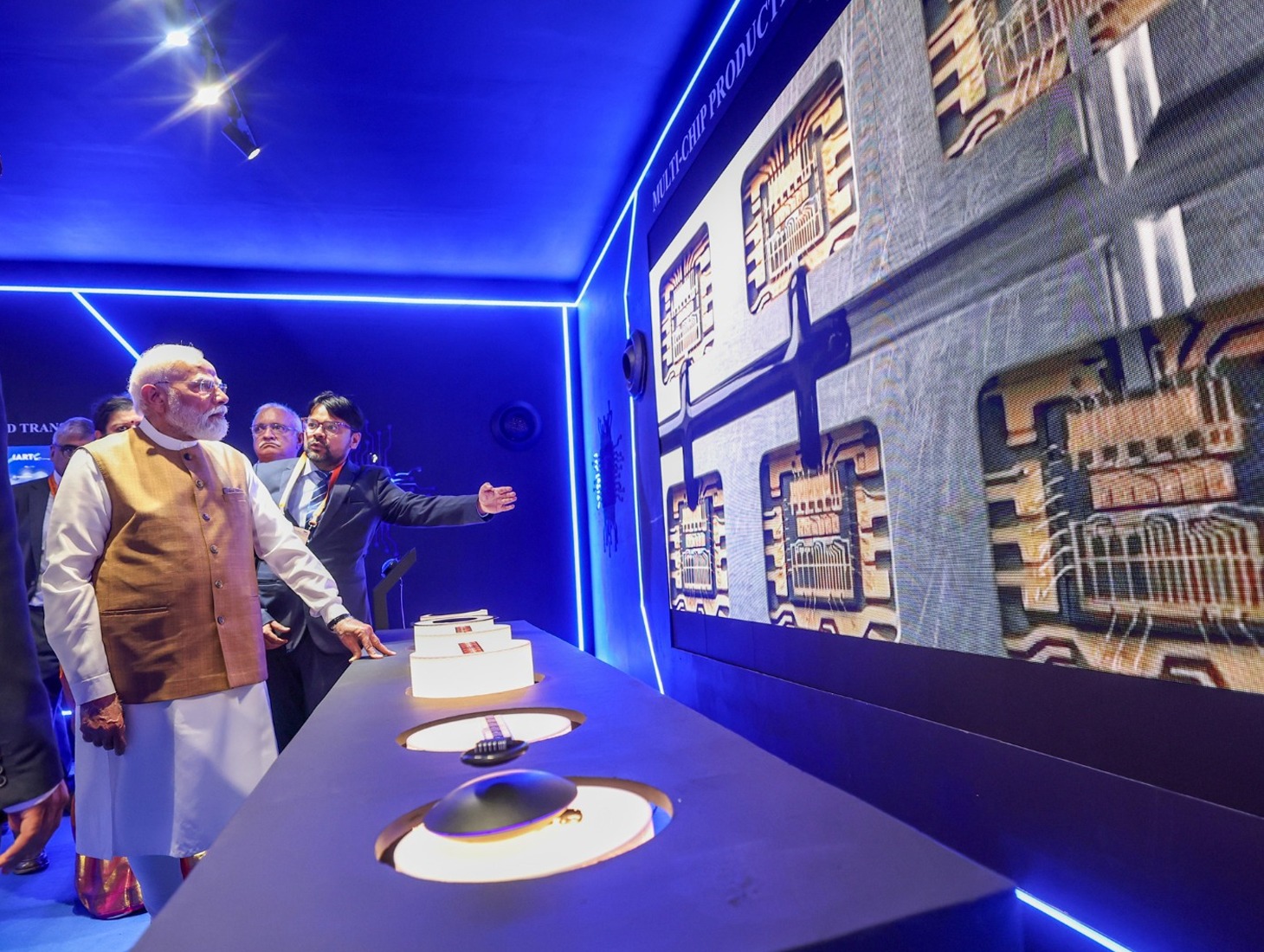
Prime Minister Narendra Modi has said India is working to strengthen its position as a reliable semiconductor supplier in the global market, as he inaugurated Kaynes Technology’s semiconductor plant in Sanand, Gujarat, and marked the start of production at the facility. Launching the plant on Tuesday, Modi said the rapid succession of semiconductor milestones in Gujarat reflected the speed at which India’s chip ecosystem was expanding. He noted that he had visited Sanand just a month ago for the commencement of production at Micron’s plant and said the latest launch underlined the momentum behind India’s semiconductor ambitions.
Congratulating Kaynes Technology, the Gujarat government and workers at the facility, the prime minister described it as a significant moment because an Indian company had entered semiconductor chip manufacturing. He said the company had now become part of the global semiconductor supply chain and predicted that more Indian firms, in partnership with global players, would help build a more resilient supply chain.
Modi said the new plant represented the idea of “Make in India, Make for the World”, pointing out that the facility will supply Intelligent Power Modules to a California-based company and that a large share of its output has already been booked for export. He said the project had effectively created a link between Sanand and Silicon Valley.
He said the modules produced at the plant would support the electric vehicle ecosystem and heavy industry in India and abroad, adding that the project was not just about one product but about India establishing itself as a dependable semiconductor supplier.
The prime minister said the Covid pandemic and geopolitical conflicts had exposed the vulnerability of global supply chains, particularly in semiconductors, rare earth minerals and energy. He argued that India’s rise in these sectors was important not only for its own economic interests but also for global stability.
Modi said the decision to make India a global semiconductor hub was taken during the pandemic, leading to the launch of the India Semiconductor Mission in 2021. He described semiconductor self-reliance as central to India’s ambitions in artificial intelligence, electric vehicles, clean energy, defence and electronics, calling the mission a sign of India’s growing confidence.
He said work was currently underway on 10 semiconductor-related projects worth more than ₹1.6 lakh crore across six states, with the Kaynes and Micron projects among the key initiatives. He also highlighted the development of the indigenous Dhruv 64 microprocessor, which he said would support secure 5G infrastructure, automotive electronics and industrial automation.
The prime minister said the next phase of the India Semiconductor Mission would focus on domestic production of semiconductor equipment and materials, with the goal of building a full-stack chip ecosystem in India. He said the government was also close to meeting its target of training more than 85,000 design professionals, while the Chips to Startup programme had already enabled nearly 400 universities and startups to design and manufacture more than 55 chips.
Citing industry estimates, Modi said India’s semiconductor market was currently worth about $50bn and could exceed $100bn by the end of the decade. He said India’s objective was to manufacture as many chips as possible domestically to meet its own needs.
He also highlighted efforts to secure critical raw materials through initiatives such as the National Critical Minerals Mission, a ₹1,500 crore mineral recycling scheme and a proposed Rare Earth Corridor linking coastal states including Odisha, Andhra Pradesh, Tamil Nadu and Kerala. Describing the current decade as India’s “Techade”, the prime minister said the country aimed not just to adapt to technological change but to lead it. He pointed to reforms in sectors such as space, nuclear energy and quantum computing, and said India’s growing semiconductor capacity would strengthen its wider technology and AI ecosystem.
Modi said the Kaynes plant would add momentum to India’s ambition of becoming a global manufacturing hub, while reaffirming the government’s commitment to improving ease of doing business, manufacturing and logistics.