







The North News
New Delhi, January 15
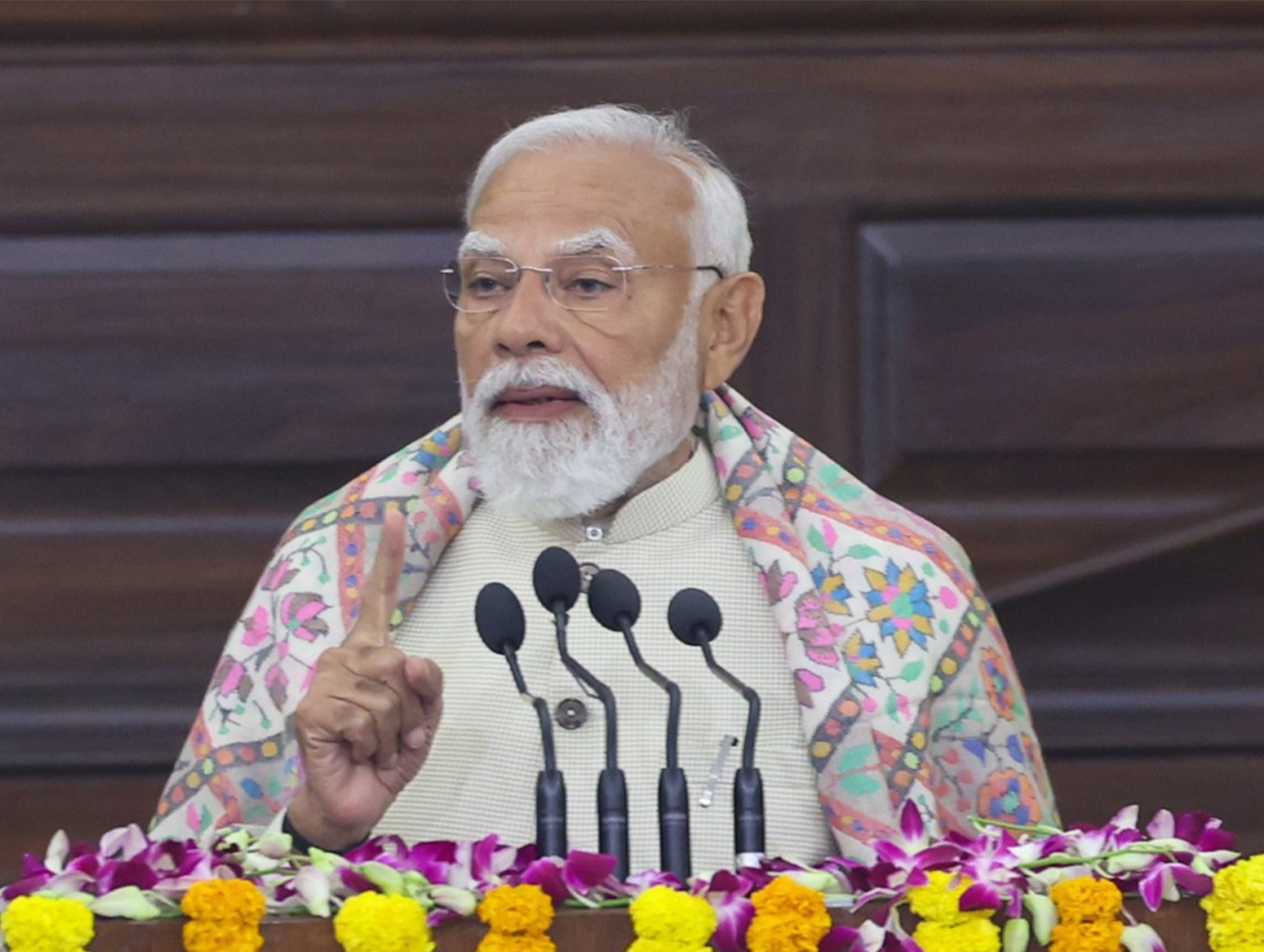
Prime Minister Narendra Modi has said that the strength of a parliamentary democracy lies in listening, patience and inclusion, as India hosted senior lawmakers from across the Commonwealth in New Delhi. Modi was speaking after inaugurating the 28th Conference of Speakers and Presiding Officers of the Commonwealth (CSPOC) at the Central Hall of Samvidhan Sadan in the Parliament House complex on Thursday.
In his address, the Prime Minister said the role of a Speaker was “unique”, noting that while Speakers often speak little, their responsibility is to listen to all sides and ensure every member has a chance to be heard. He described patience as a defining quality of presiding officers, who must manage even the noisiest debates with calm and balance.
Welcoming delegates, Modi said the venue itself carried deep historical significance. He recalled that during the final years of British rule, India’s Constituent Assembly met in the same hall to draft the country’s Constitution. For 75 years after independence, the building served as the national parliament and witnessed debates that shaped modern India. Renamed Samvidhan Sadan, he said, the hall now stands as a symbol of the country’s democratic journey.
The Prime Minister noted that this was the fourth time India had hosted the Commonwealth Speakers’ conference, with this year’s theme focusing on the effective delivery of parliamentary democracy. He said early doubts about whether democracy could survive in a country as diverse as India had been proved wrong, arguing that diversity had instead strengthened democratic institutions.
Modi said India had also countered claims that democracy would slow development, pointing to economic growth and large-scale public programmes. He argued that democratic systems in India had provided “stability, speed and scale”, helping the country expand digital payments, manufacturing, transport networks and its startup ecosystem.
“Democracy in India means last-mile delivery,” he said, adding that public welfare programmes were designed to reach citizens without discrimination. He said millions had been lifted out of poverty in recent years, describing this as evidence that “democracy delivers”.
Highlighting the scale of India’s elections, Modi referred to the 2024 general election as the largest democratic exercise in history, with nearly a billion registered voters. He said that women were playing an increasingly central role in public life, pointing to female leadership at the national, state and grassroots levels.
The Prime Minister described India as a society marked by extraordinary linguistic and cultural diversity, with hundreds of languages, thousands of publications and extensive broadcast media. He compared Indian democracy to a deeply rooted tree, drawing on references from ancient texts, Buddhist traditions and historical village assemblies to underline a long-standing culture of debate and collective decision-making.
Turning to international issues, Modi said India, home to nearly half of the Commonwealth’s population, was committed to supporting shared development goals, including health, climate action and innovation. He said India was also working to amplify the voice of the Global South, including during its recent G20 presidency, and was building open-source digital platforms that could be adapted by other developing countries.
He also highlighted efforts to make parliamentary processes more accessible, including study tours, training programmes and the use of artificial intelligence to translate debates into regional languages in real time. Concluding his remarks, Modi said exchanges at the conference would strengthen learning among parliaments, adding that he regularly shared international best practices with India’s own legislative leaders.
Among those present were Lok Sabha Speaker Om Birla, Rajya Sabha Deputy Chairman Harivansh, Inter-Parliamentary Union President Tulia Ackson, and Commonwealth Parliamentary Association Chair Christopher Kalila.