









The North News
Shimla, July 7
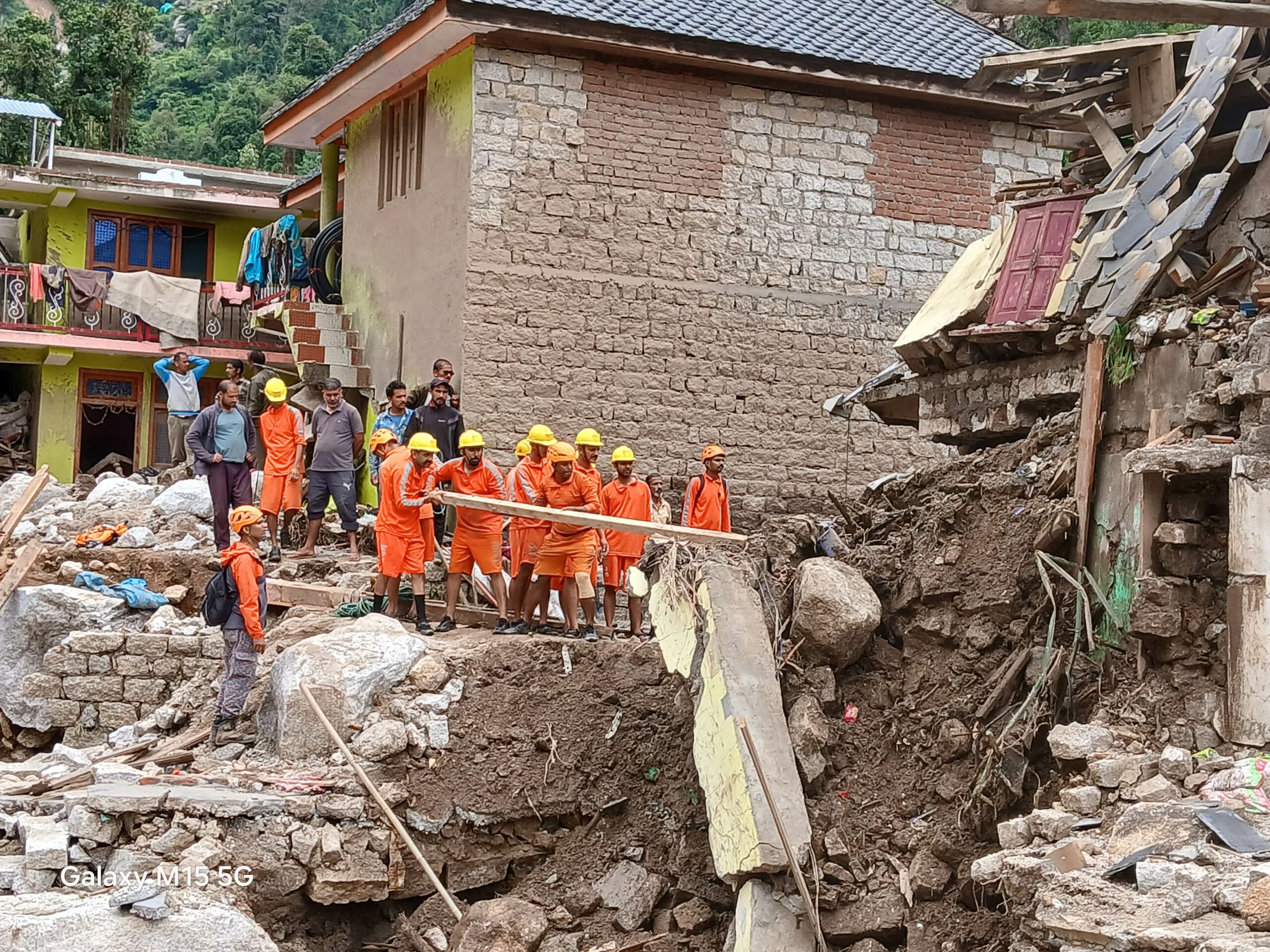
Himachal Pradesh is once again in the grip of monsoon destruction, with at least 78 people confirmed dead, 121 injured, and 37 still missing after a series of devastating cloudbursts, flash floods and landslides hit the state between 26 June and 6 July. Officials have described the situation as “grave,” with villages cut off, homes washed away, and large stretches of road rendered impassable. The disaster has led to the complete destruction of 163 homes and damage to 134 others, while 346 cowsheds have been swept away across the hilly terrain. Over 243 roads remain blocked, paralysing movement and isolating many rural areas.
On Sunday, cloudbursts in Chamba and Mandi districts caused fresh chaos. In Chamba’s Churah valley, a flash flood in the Kanghela rivulet swept away a newly constructed bridge, cutting off four panchayats. In Mandi’s Chauharghati region, a night-time cloudburst in the Koratang stream destroyed three footbridges and damaged standing crops, dealing a blow to already distressed farmers.
In Una district, the Swan river breached its banks after heavy morning rainfall, flooding several homes and submerging a petrol pump near the Jhaleda bridge. Water entered multiple residential areas, prompting emergency response teams to act swiftly.
The state is under red alert, with the weather department warning of continued heavy rainfall in the coming days. Disaster response teams have been deployed across affected regions, but accessibility remains a challenge due to the hilly terrain and blocked roads.
Experts say the frequency and intensity of such extreme weather events in Himachal Pradesh are increasing, likely linked to broader climate change patterns. “This is not just a weather event—it’s a climate emergency unfolding in real time,” said a senior disaster management official.
Local communities, already reeling from previous years of monsoon damage, are now calling for long-term solutions and better preparedness. Many have accused successive governments of ignoring early warning systems and allowing construction in ecologically sensitive zones.
As the monsoon continues, the state’s fragile infrastructure is being tested yet again—and with the death toll mounting, the true scale of the disaster may only become clear in the days ahead.