








The North News
New Delhi, December 22
India and New Zealand have concluded a comprehensive Free Trade Agreement (FTA) that the government says is designed to boost farmer incomes, create jobs and expand opportunities for students, professionals and small businesses, marking a major step in India’s economic engagement with the Indo-Pacific.
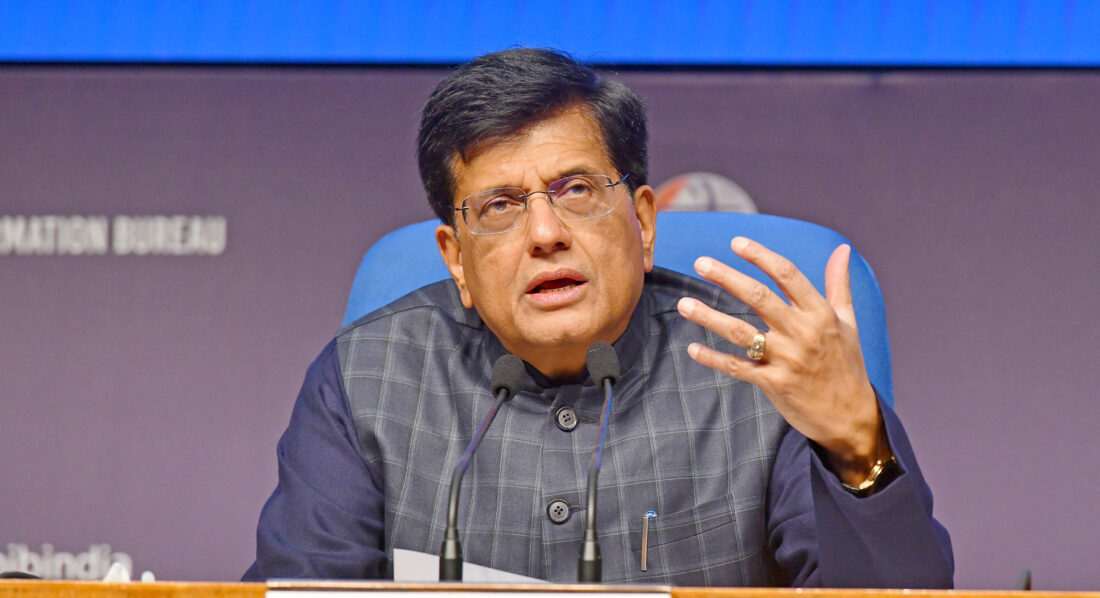
Calling the agreement “trade built around people”, Commerce and Industry Minister Piyush Goyal said the pact would support farmers, entrepreneurs, women, students and innovators. He said the deal aimed to raise agricultural productivity, improve yields and open new pathways for Indian businesses and youth to learn, work and grow globally.
Negotiations for the agreement were launched in March 2025 during talks between Mr Goyal and New Zealand’s trade minister Todd McClay, and were concluded after five formal rounds of negotiations along with several in-person and virtual discussions. Officials say it is among India’s fastest-finalised trade deals and is aligned with the government’s long-term development vision, Viksit Bharat 2047.
Trade, services and market access
Under the FTA, New Zealand will eliminate tariffs on all its tariff lines, providing duty-free access for Indian exports. The government says this will strengthen the competitiveness of labour-intensive sectors such as textiles, apparel, leather, footwear, marine products, gems and jewellery, handicrafts, engineering goods and automobiles, supporting workers, artisans and micro, small and medium-sized enterprises.
The agreement also includes what officials describe as New Zealand’s most ambitious services offer in any of its FTAs to date. India has secured commitments in IT and IT-enabled services, professional services, education, financial services, tourism, construction and other business services, creating new opportunities for high-skill employment.
Commerce Secretary Rajesh Agrawal described the pact as a “new-generation trade agreement” built around tariffs, agricultural productivity, investment and talent mobility, with complementary gains for both economies.
Farmers, mobility and investment
Agriculture features prominently in the agreement, with dedicated agri-technology action plans on apples, kiwifruit and honey. These focus on improving productivity through research collaboration, better planting material, capacity building for growers and support for orchard management, post-harvest practices, supply chains and food safety. Officials say the measures are aimed at strengthening domestic capabilities and raising farm incomes.
The FTA also introduces a future-ready mobility framework, positioning India as a key supplier of skilled and semi-skilled talent. It provides improved entry and stay provisions for Indian students, professionals and youth, including work opportunities during studies, post-study pathways, working holiday visas and a new temporary employment entry route.
Under this pathway, up to 5,000 Indian professionals can be granted visas at any time for stays of up to three years. Eligible professions include AYUSH practitioners, yoga instructors, Indian chefs and music teachers, as well as workers in high-demand sectors such as IT, engineering, healthcare, education and construction.
On investment, New Zealand has committed to facilitating up to $20bn in investments into India over the next 15 years, supporting manufacturing, infrastructure, services, innovation and employment under the Make in India programme. Indian firms are also expected to gain from access to New Zealand and wider Pacific Island markets.
Pharma, regulation and wider cooperation
The agreement is expected to ease regulatory access for Indian pharmaceutical and medical device exports by recognising inspections from comparable global regulators, including the US Food and Drug Administration and European Medicines Agency. Officials say this will reduce duplication, cut compliance costs and speed up approvals.
Commitments have also been made on geographical indications, with New Zealand agreeing to amend its laws to facilitate registration of Indian wines, spirits and other goods. Cooperation has been agreed in areas including AYUSH, culture, fisheries, audiovisual tourism, forestry, horticulture and traditional knowledge systems.
Beyond tariff cuts, the FTA includes provisions to address non-tariff barriers through regulatory cooperation, greater transparency, streamlined customs procedures and sanitary and phytosanitary standards.
Growing ties
Economic engagement between India and New Zealand has gathered pace in recent years. Bilateral merchandise trade reached $1.3bn in 2024–25, while total trade in goods and services stood at about $2.4bn, led by travel, IT and business services.
Officials say the agreement provides a stable and predictable framework to unlock the relationship’s full potential. The India–New Zealand FTA is the third such deal concluded this year under the leadership of Narendra Modi, and is being presented as a key step towards building a more competitive, inclusive and resilient Indian economy.