








The North News
New Delhi, November 24
Prime Minister Narendra Modi has paid tribute to veteran actor Dharmendra, describing his death as “the end of an era in Indian cinema”. In a message posted on X, Modi said the Bollywood star was “an iconic film personality” whose performances combined “charm and depth” and resonated with “countless people”.
He said Dharmendra’s ability to inhabit diverse roles earned him generations of admirers, who also valued his “simplicity, humility and warmth”. “My thoughts are with his family, friends and innumerable fans,” the Prime Minister wrote. “Om Shanti.”
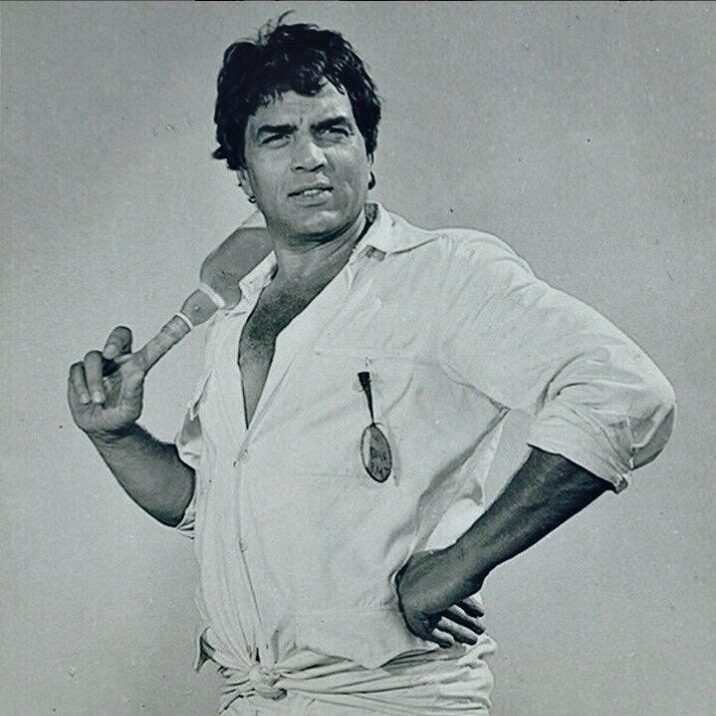
Legendary Bollywood actor Dharmendra, one of the most recognisable and cherished figures in Hindi cinema, has died at the age of 89 at his Mumbai residence. His wife Hema Malini, daughter Esha Deol and son Sunny Deol, along with Amitabh Bachchan and Abhishek Bachchan, were among those who attended the cremation at Mumbai’s Vile Parle crematorium.
For millions of Indians, Dharmendra was the face of a certain kind of cinematic heroism — understated, warm and effortlessly charismatic. Born Dharmendra Kewal Krishan Deol in Punjab in 1935, he entered the industry at a time when Hindi cinema was dominated by theatrical stars and elaborate melodrama. What set him apart was his quiet intensity and an easy physicality that translated into a broad spectrum of roles. His early rise in the 1960s through films such as Ayee Milan Ki Bela and Phool Aur Patthar marked him as a performer with rare screen presence. Audiences responded to the gentle confidence he brought to each role, and he earned the enduring nickname “He-Man” — a reference to the rugged masculinity he embodied on screen. Another affectionate title, “Garam Dharam,” soon followed, capturing both his popularity and his signature swagger.
The 1970s and 80s cemented his place as one of Indian cinema’s biggest stars. In Ankhen, Yaadon Ki Baaraat, Seeta Aur Geeta and a string of other successful films, he moved easily between genres — from high-voltage action to tender romance to light-hearted comedy. His versatility made him both relatable and iconic, a balance few actors have managed to achieve.
But the role that cemented his legacy for generations came in 1975, in the iconic Bollywood blockbuster Sholay. As Veeru, the affable, brave and big-hearted outlaw, Dharmendra created one half of one of Hindi cinema’s most memorable friendships, paired with Amitabh Bachchan’s stoic Jai. Their camaraderie shaped an entire era of screen storytelling, making Sholay not just a film but a cultural reference point.
His contribution to Indian cinema was recognised through some of the country’s highest honours, including the Filmfare Lifetime Achievement Award in 1997 and the Padma Bhushan in 2012. He also served briefly as a BJP Member of Parliament from Bikaner, though politics remained a small chapter in a life defined by films.
As news of his death spread, tributes poured in from across the industry, reflecting the breadth of his influence and the affection he inspired.
Veteran actor Raj Babbar described his passing as “an irreparable loss to Indian cinema,” calling him “a pillar of grace, generosity and humanity — on screen and off it.”
Sharmila Tagore, who worked with him in several films, confirmed the news and remembered him as “a warm-hearted co-star, a dignified presence, and one of the most compassionate men in the industry.” His death, she said, “truly marks the end of a golden chapter.”
On Instagram, filmmaker Karan Johar said it was “the end of an era,” calling him “a massive megastar” and “the embodiment of a hero in mainstream cinema.” Johar added that there was now “a gaping hole in our industry… a space that can never be filled.”
Punjabi actor-singer Gippy Grewal wrote on X that the news was “heartbreaking,” describing Dharmendra as “one of the most genuine and knowledgeable souls” he had known, and “a guiding light” whose kindness left a lasting impact on everyone around him.