


By K J M Varma
Beijing, March 5
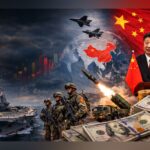
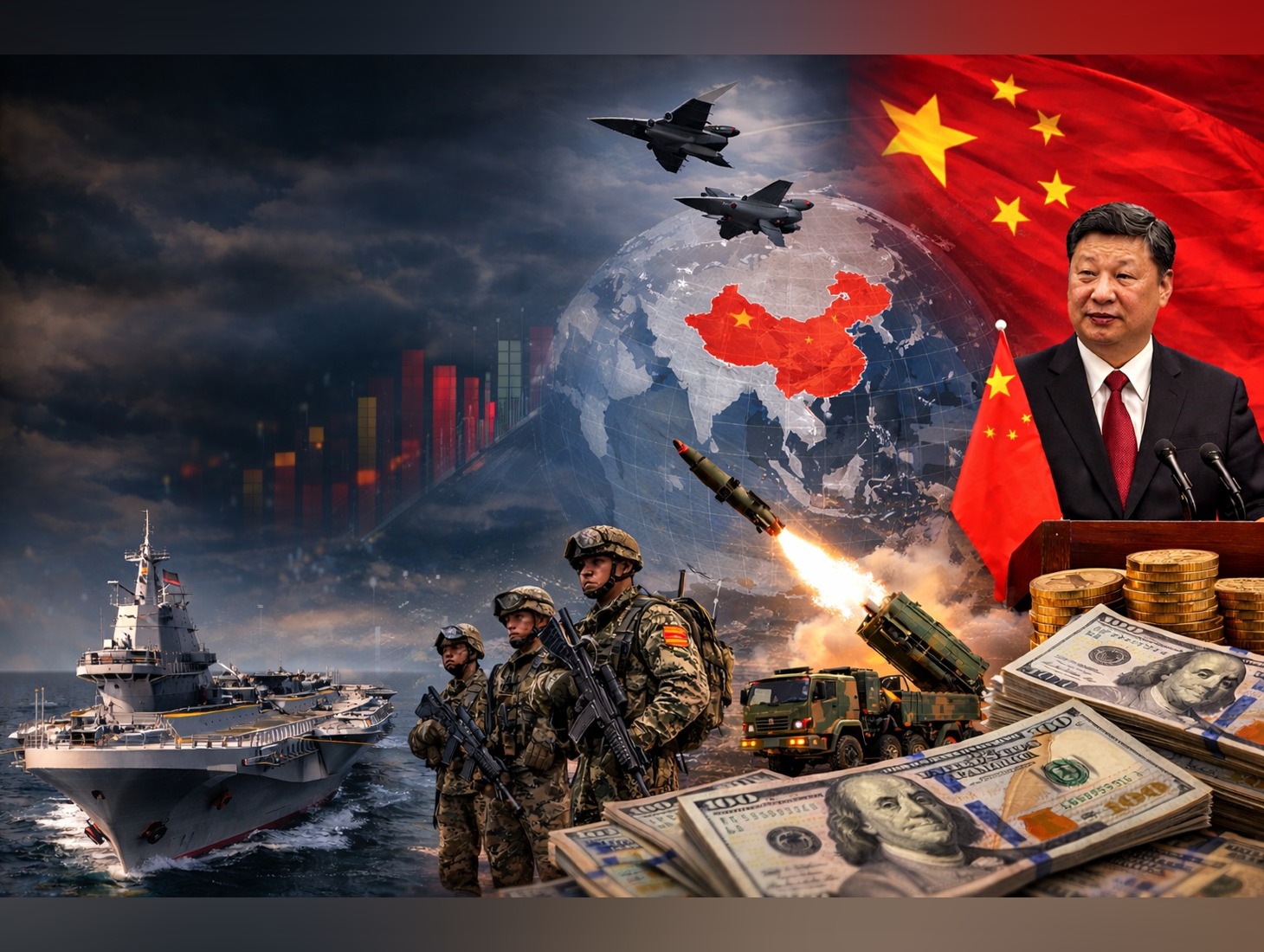
China on Thursday hiked its defence budget to about 1.91 trillion yuan (USD 277 billion), an increase of seven per cent from last year in yuan terms, as part of its efforts to ramp up rapid modernisation of armed forces to catch up with the US military.
Flanked by Chinese President Xi Jinping and other top leaders at the opening session of the National People’s Congress (NPC), Premier Li Qiang presented his annual work report in which he proposed to hike defence spending to roughly 1.91 trillion yuan (USD 276.9 billion in dollar terms) for the 2026 fiscal year, a seven per cent year-on-year increase, state-run China Daily reported.
The other highlight of his proposal was to lower the GDP target for the Chinese economy to 4.5 to five per cent in the face of Trump’s trade tariff war, the worsening global crisis following the US-Iran war and headwinds in the domestic economy, owing to property market slump and unemployment crisis.
China, which in the past grew at double digits, has been setting a five per cent target for the GDP in the last three years amid growing domestic and external economic challenges.
This year, the target was lowered to 4.5 to 5 per cent for the first time which was seen as an acknowledgment that the world’s second largest economy faced headwinds relying more on external trade due to stagnating domestic consumption.
On the increasing defence spending, Chinese official media sought to defend it saying that the military spending will maintain single-digit growth for an 11th consecutive year since 2016, and will become the lowest percentage increase since the 2021 fiscal year.
Chinese defence experts point to the US, world’s largest spender on military affairs, hiking its defence spending to one trillion US dollars for 2026.
A large proportion of the money would be used against China, state-run China Daily quoted the US’ National Defense Authorisation Act for Fiscal Year 2026.
On the contrary, China’s defence spending, only second to that of the US, has been growing over the years putting enormous pressure on India and other neighbouring countries to scale up their defence budgets in the face of economic challenges.
India’s defence budget of Rs 7.85 lakh crore this year amounted to USD 86 billion in dollar terms.
Comparatively China’s defence spending is more than three times than that of India.
China’s defence budget figures are viewed with scepticism in the light of massive military modernisation, including building aircraft carriers, rapid construction of advanced naval ships and modern stealth aircraft being carried out at a feverish pitch by the Chinese military.
China already has three aircraft carriers and the fourth one was in the offing.
Li’s report said China’s defence spending remains comparatively modest across key relative indicators, including its share of GDP, per capita defence expenditure, and defence expenditure per military personnel.
Last year China announced a 7.2 per cent increase for its national defence budget to USD 249 billion for 2025 which is a USD 17 billion rise compared to 2024.
The defence spending continued to be increased amid massive purges in the military by Xi. Last week, NPC dismissed 19 members, including nine who are military officers.
Last month two senior Chinese military officials, including the highest-ranking PLA official Gen Zhang Youxia, were placed under investigation for serious violations of the ruling Communist Party’s discipline and laws and corruption sending shockwaves among the ranks of the military.
Gen Zhang is the first-ranking Vice Chairman of the powerful Central Military Commission (CMC), the overall high command of the Chinese military headed by Xi.
Zhang’s position on the CMC makes him the highest-ranking uniformed officer in the Chinese military.
His removal and subsequent detention left the seven member CMC with just two — Xi and Gen. Zhang Shengmin, secretary of the discipline inspection body — with remaining positions yet to be filled up.
In his work report, Li made it clear that the Communist Party prevails over the PLA.
China will “uphold the Communist Party’s absolute leadership over the people’s armed forces” and “comprehensively and thoroughly implement the system of the chairman of the Central Military Commission assuming overall responsibility”, Li said.
On the anti-corruption campaign in the military, Li said the “political rectification” of the military will “continue to deepen”.
The People’s Liberation Army (PLA) will “steadily advance military training and war preparedness, and accelerate the development of advanced combat capabilities”, thereby “enhancing the strategic capacity to safeguard national sovereignty, security and development interests”, he said.
Also the government will formulate a plan for strengthening the military during the 15th five-year plan period, carry out major defence-related projects and launch projects to modernise military theory and promote military-civilian cooperation.
On Taiwan, which China claims as part of it, Li said Beijing will insist on the one-China principle and “resolutely crackdown on separatist activities”. Last year, the work report only said Beijing would “oppose” such activities.
PTI