







Kolkata, April 10
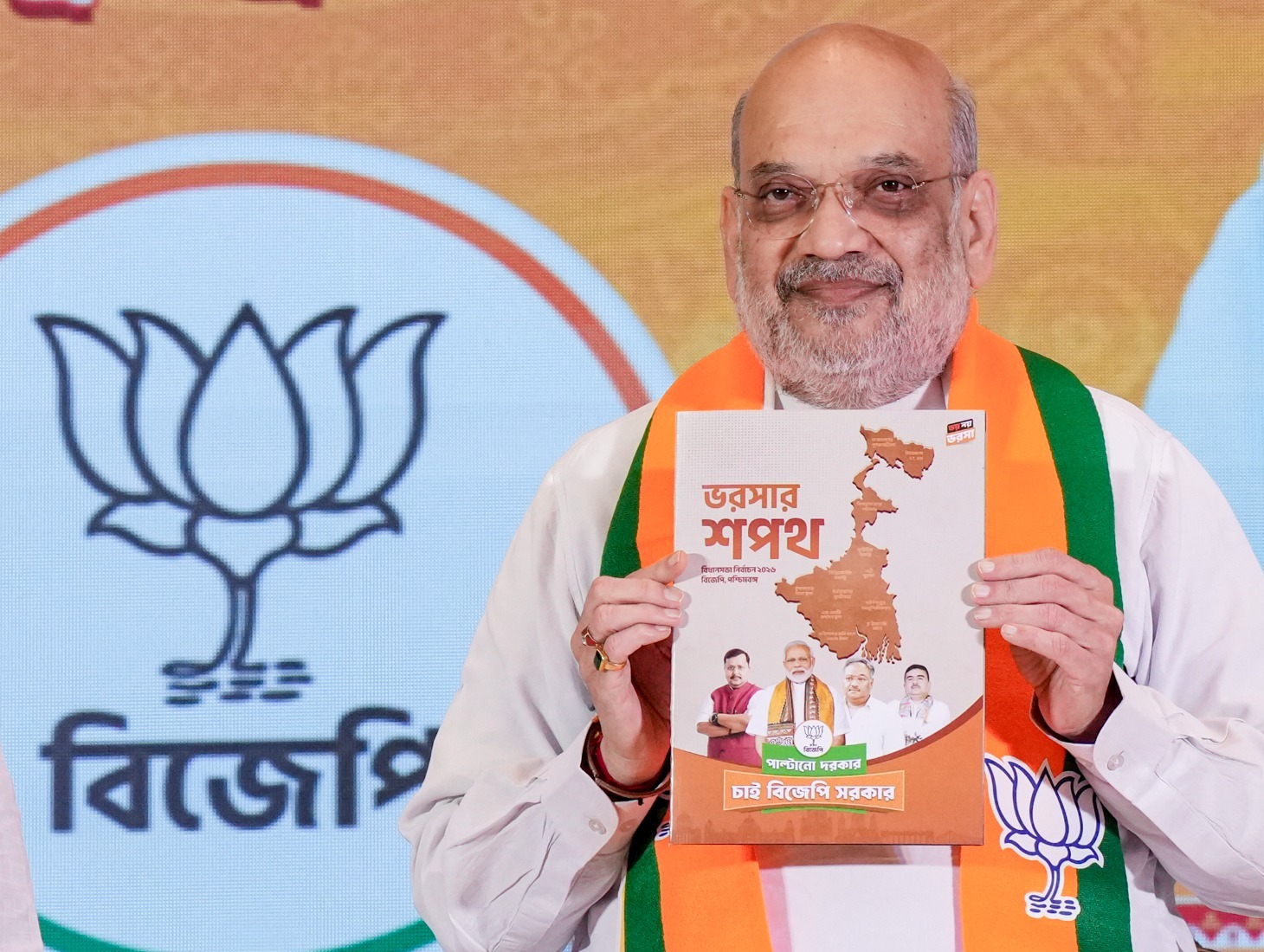
The Bharatiya Janata Party (BJP) on Friday released its election manifesto for the West Bengal assembly polls, outlining a series of ambitious pledges aimed at addressing security concerns, promoting social equality, and delivering welfare support to ordinary citizens if it forms the government. Unveiling the document, titled Sankalp Patra, Union Home Minister Amit Shah described it as a blueprint for building a “golden Bengal” and sharply criticised the 15-year rule of Chief Minister Mamata Banerjee’s Trinamool Congress (TMC), calling it a period of hardship marked by violence, corruption and economic struggles for many residents.”People in Bengal are tired and they want change,” Shah said, framing the contest as a vote on key issues including infiltration, unemployment and governance failures.
One of the manifesto’s central commitments is a strict “detect, delete and deport” approach to illegal infiltration. The BJP has vowed a zero-tolerance policy, including tighter border security and action against cattle smuggling and encroachment on government land, particularly in districts along the border such as North 24 Parganas, Nadia, Malda and Murshidabad. These promises are likely to appeal to communities like the Matua and Hindu refugees, many of whom have long expressed concerns over demographic changes and have been courted by the BJP through initiatives like the Citizenship Amendment Act. The party also pledged to introduce a Uniform Civil Code within six months of taking power, stating it would ensure “one law for all citizens”. Shah added that a separate law would protect every individual’s right to practise their faith, in an apparent effort to address concerns among minority communities.
In a direct challenge to the TMC’s strong support among women — who make up nearly half of the electorate — the BJP promised monthly financial assistance of Rs 3,000 to every woman in the state. It also proposed 33% reservation for women in government jobs, including the police, and free travel on public transport. For young people struggling with joblessness, the manifesto offers a monthly allowance of Rs 3,000, plus Rs 15,000 to help prepare for competitive exams. Those affected by past recruitment scams would receive up to five years of age relaxation, with assurances of transparent hiring and permanent jobs for deserving candidates.State government employees and pensioners, who have long complained about delays in benefits, were promised parity in dearness allowance with central government staff and implementation of the Seventh Pay Commission within 45 days. Farmers would see increased support, with the state adding Rs 3,000 to the central PM-Kisan scheme, bringing the annual assistance to Rs 9,000 per family.
To counter perceptions that it focuses only on identity issues, the BJP outlined infrastructure plans, including new AIIMS, IIT, IIM and fashion institutes in North Bengal, along with a modern cancer hospital. It also proposed four new townships, deep-sea ports at Tajpur and Kulpi, and a dedicated development strategy for Haldia port. Kolkata would get a 10-year vision to transform it into a globally recognised “living city”, while Darjeeling would be promoted as a heritage tourism spot. The manifesto emphasised the development of hill areas while keeping the state united. On the cultural front, plans include a spiritual circuit dedicated to Chaitanya Mahaprabhu, a cultural centre honouring Rabindranath Tagore, and a Vande Mataram museum. The party also committed to forming committees of retired Supreme Court judges to investigate cases of political violence and crimes against women, including the high-profile Sandeshkhali incidents. The manifesto positions the BJP as offering a comprehensive alternative to voters weary of the current administration, blending security measures with direct financial help for families across Bengal.