







 The North News
New Delhi, February 3
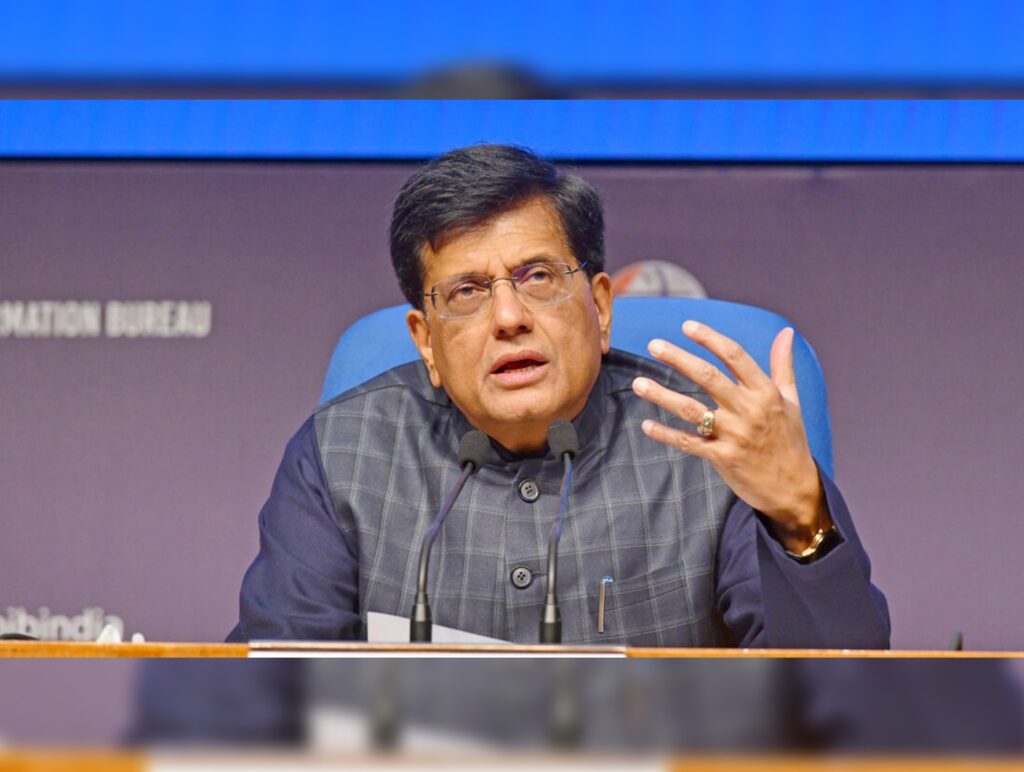
India has ensured the interests of its sensitive agriculture and dairy sectors are completely protected in the bilateral trade pact that it is finalising with the US following months of negotiations, Commerce and Industry Minister Piyush Goyal said on Tuesday.
Hours after US President Donald Trump announced a cut in tariff to 18 per cent from 50 per cent in return for favourable treatment by New Delhi, Goyal said a joint statement will be issued by both countries soon that will spell out the details of the pact.
The two countries have reached a framework for a bilateral trade agreement.
He said that a joint statement will be issued by both countries “shortly”, which will have details of the pact, which was awaited by industry and exporters eagerly.
The minister assured that the agreement will provide huge opportunities for people of the country and “will protect the sensitive sectors, the interests of our agriculture and our dairy sectors in full respect”.
Goyal added that the agreement will open huge opportunities for Indian labour-intensive sectors, such as textiles, plastics, apparel, home decor, leather and footwear, gems and jewellery, organic chemicals, rubber goods, machineries and aircraft. Import duty on most of these sectors will come down soon to 18 per cent from the present 50 per cent in the US markets.
The minister said that India is a fast-growing and large economy and demand is continuously increasing for goods such as ICT products, data center equipment, high-quality technology and innovation items, and raw materials.
“And in that situation, this deal also opens up opportunities for India to get the best-in-class, world-class technologies to further power the India growth story,” he told reporters here.
He added that India has got a “very good” trade deal with the US, better than the competitors, as Indian goods will now attract 18 per cent duty.
The major countries which compete with Indian labour-intensive sectors in the US markets include China, Vietnam (20 per cent), Malaysia (19 per cent), Bangladesh (20 per cent), Cambodia and Thailand (19 per cent each).
Without giving details of what has been agreed with Washington, Goyal said the trade deal is in the final stages, and an Indo-US joint statement will be issued shortly detailing the contours of the agreement.
“We will be shortly issuing a joint statement…along with the details which we will be shortly inking with the US. And as soon as the final understanding of the deal is inked and the joint statement is finalised, technical processes are completed, full details will be shared,” he said.
The announcement came at an opportune time for exporters as they were facing stress in supplying goods to the US, which accounts for over 20 per cent of the country’s total exports.
India’s merchandise exports to the US declined 1.83 per cent to USD 6.88 billion in December 2025 due to high tariffs imposed by America. Exports also contracted in September and October last year. However, it rose 22.61 per cent in November.
During the April-December period of this fiscal year, the country’s exports to the US increased 9.75 per cent to USD 65.87 billion, while imports rose 12.85 per cent to USD 39.43 billion.
According to sources, the US has agreed to remove the 25 per cent punitive tariff on India for purchasing Russian oil, and the reciprocal tariff has come down to 18 per cent from 25 per cent.
“So the final tariffs on India will be 18 per cent,” a source said.
Sectors such as leather and footwear, marine products (including shrimp), chemicals, plastics and rubber, home decor and carpets, machinery, and select agricultural products, including processed items, will gain a major advantage in the US market vis-a-vis competing nations as the American duties will come down to 18 per cent.
“These goods will now get best rates in the US,” a source said, adding that different Indian clusters like Tirupur (apparels), Surat (gems and jewellery), which were affected by the high tariffs, will now gain.
The reduction of tariffs will immediately boost exports in these sectors, which stood at USD 30 billion to the US. The country’s shipments worth USD 4 billion are already in the exempted category like minerals and natural resources, and certain agri products.
Many of the sectors like pharma and electronics, are already exempted, which account for about USD 28 billion of exports. Then there are other items like food products and minerals where duties are nil.
Another USD 28 billion of exports are covered by Section 232 tariffs that were imposed on grounds of national security. These tariffs on steel, aluminium, copper, auto and auto parts apply to all countries equally, so they do not impact only India’s competitiveness. These products face a 50 per cent tariff.
Under the pact, while import duties will be eliminated in certain areas on the day the agreement comes into force, in others they will be phased out over time. In some sectors, duties will be reduced, while in others, quota-based concessions will be provided.
India has always kept out sensitive sectors such as dairy, rice, wheat, meat, poultry, cereals, GM foods, soymeal, and maize out of the ambit of its trade agreements.
On Trump’s statement that India has committed to buy USD 500 billion worth of American goods such as energy, technology, agricultural items, coal, and other goods, sources said this target is for a period of five years, and will also include the purchase of aircraft and parts.
“…we will be importing goods worth USD 50-55 billion, for data centres alone we will need goods worth USD 20 billion a year,” the source said, adding that the 18 per cent duty will come into force after signing of the joint statement.
India would be buying more oil and gas, technology items like advanced chips and data centres, precious metals and gems, aeroplanes and their parts. These purchases would be possible as even in aviation alone, USD 100 billion orders are placed or are in pipeline, the sources added.
In 2024, India’s exports to the US stood at USD 87.3 billion, while imports were USD 41.5 billion.
In February last year, the two sides announced starting negotiations for a Bilateral Trade Agreement (BTA) with an aim to boost bilateral trade in goods and services to USD 500 billion by 2030 from USD 191 billion at present.
Chandigarh-born entrepreneur honoured as George Mason University names innovation centre after him and his wife…
Jai Ram Thakur discusses Himachal’s development, seeks PM Modi’s guidance during Delhi meeting New Delhi,…
Himachal Pradesh Leader of the Opposition(LoP) and former Chief Minister Jai Ram Thakur has accused…

Zirakpur markets see subdued activity as several shops remain shut; traffic movement remains low amid…