







 The North News
The North News
Chandigarh, December 16
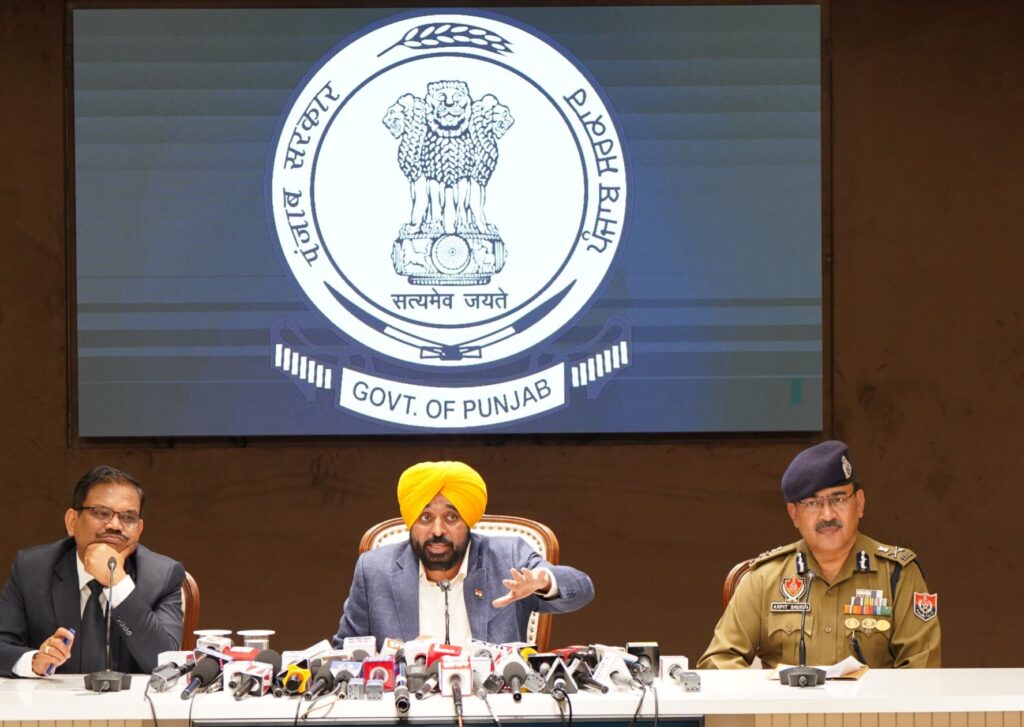
The Punjab government has announced wide-ranging arrangements for health services, transport, sanitation and security ahead of the Shaheedi Sabha at Fatehgarh Sahib, where large numbers of devotees from India and abroad are expected to gather to pay homage to the younger Sahibzadas and Mata Gujri. Addressing the media on Tuesday, Chief Minister Bhagwant Singh Mann said the state’s priority was to ensure that pilgrims faced no inconvenience during the annual martyrdom congregation. He said special measures had been put in place to cope with the expected influx of devotees.
To strengthen healthcare facilities, Mann said 20 Aam Aadmi Clinics and five dispensaries were being set up in and around Fatehgarh Sahib. These centres will be staffed by specialist doctors and support personnel, with adequate medicines and essential medical equipment arranged, he added.
Recalling the sacrifice of Baba Zorawar Singh and Baba Fateh Singh, the younger sons of Shri Guru Gobind Singh, the Chief Minister described their martyrdom as unparalleled in human history. He said that although more than three centuries had passed, the emotional and spiritual impact of the sacrifice continued to be deeply felt by Sikhs across the world.
To facilitate smooth movement within the town, the Punjab government will provide free transport for devotees through an inter-city shuttle bus service. During the Shaheedi Sabha, around 200 shuttle buses and 100 e-rickshaws will operate to ferry pilgrims from designated parking areas to gurdwaras and other key locations. Traffic management will be supported by the use of Google services, which will provide real-time information on road conditions around Fatehgarh Sahib, allowing authorities to implement immediate alternative arrangements in case of congestion. Five large and 16 smaller parking areas have been prepared to accommodate vehicles.
On security, Mann said more than 3,300 police personnel would be deployed to assist devotees and maintain law and order. An integrated control centre has been set up, along with a dedicated public helpline. Around 300 CCTV cameras are being installed at key points, and drones will be used for aerial surveillance.
To ensure uninterrupted mobile connectivity, temporary mobile towers are being installed by telecom companies. A fleet of 60 ambulances and fire brigade vehicles will also remain on standby to deal with any emergencies.
Cleanliness has been identified as a major focus area, the chief minister said, with machinery brought in from several districts and volunteer teams working in shifts round the clock to maintain hygiene and preserve the sanctity of the town.
Mann also announced that a large blood donation camp would be organised during the Shaheedi Sabha as a humanitarian initiative. He warned that unauthorised blood donation camps would not be permitted and that strict action would be taken against violators.
He said the Punjab government would extend full cooperation to the Shiromani Gurdwara Parbandhak Committee (SGPC) for arrangements related to devotees’ comfort. Referring to the recent notification declaring Amritsar’s walled city, Talwandi Sabo and Sri Anandpur Sahib as holy cities, Mr Mann said the move fulfilled a long-standing demand of the Sikh community worldwide.
The Chief Minister also criticised the BJP-led central government over air pollution in Delhi, saying Punjab had often been blamed in the past despite its current Air Quality Index ranging between 70 and 110, compared with around 500 in the national capital. He added that incidents of stubble burning in Punjab had declined sharply, a fact acknowledged by the central government in Parliament.
Commenting on the renaming of central schemes and public places, Mr Mann said changing names did not improve governance, arguing that only people-centric policies could bring real change.
Chief Secretary K A P Sinha and Special Director General of Police (Law and Order) Arpit Shukla were present at the briefing.

Party’s Patiala rural in-charge Jaspal Singh Bittu Chatha also raises drug abuse and law and…
Six states sign Rs 15,624-crore pact; Delhi, Haryana and Rajasthan to bear state’s estimated power-component…
Search at Urban Estate Phase II office continues into morning; two government vehicles parked outside…
Chandigarh, September 15 Rahulinder Singh Sidhu, son of former Punjab chief minister Rajinder Kaur Bhattal,…