



 The North News
The North News
New Delhi, December 5
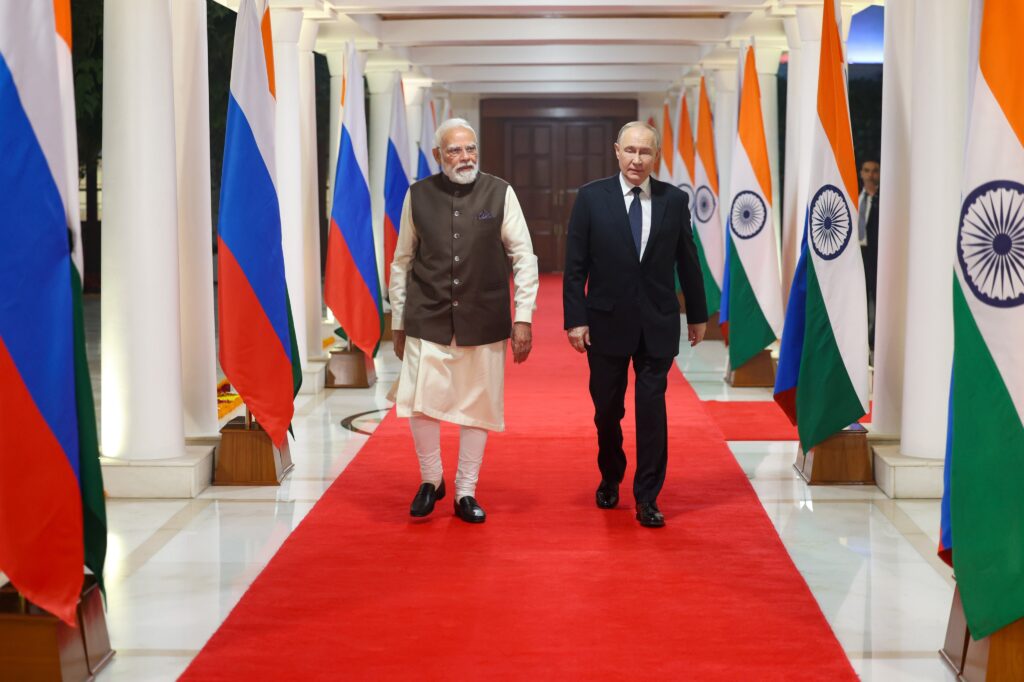
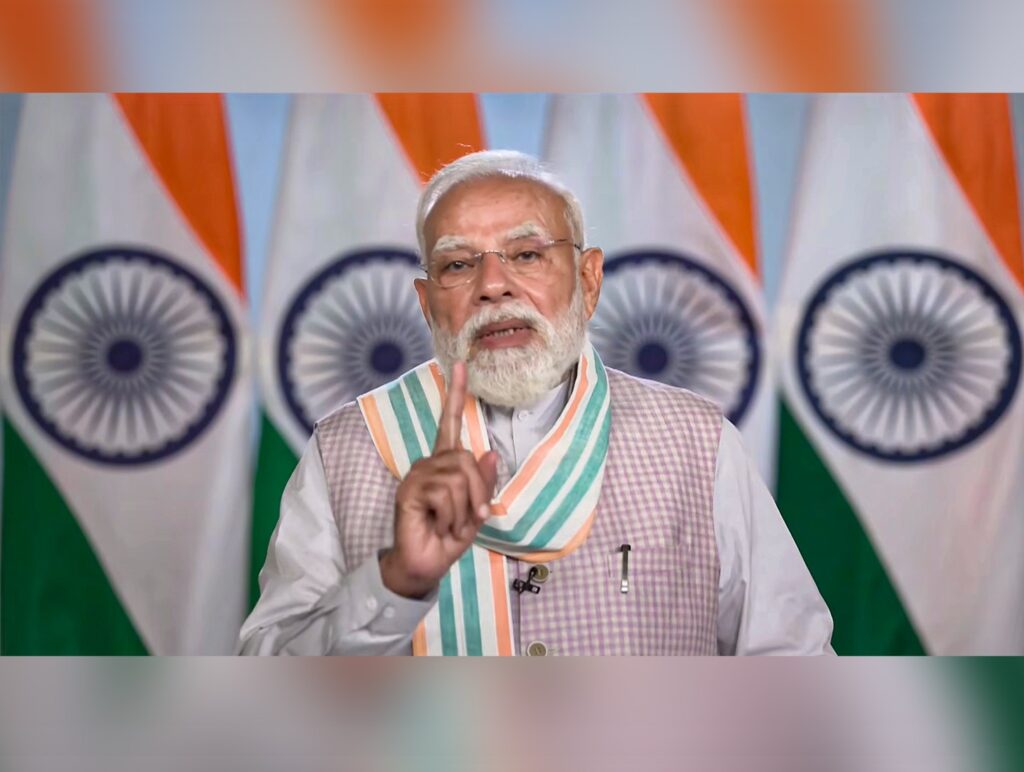
India and Russia have set out a long-term economic agenda and reaffirmed the durability of their strategic partnership during a summit in New Delhi on Friday, as Prime Minister Narendra Modi and Russian President Vladimir Putin sought to signal continuity amid geopolitical uncertainty. Speaking after the 23rd annual India–Russia summit, Modi said both countries had agreed on an economic cooperation programme running to 2030, and were “moving purposefully” towards the early conclusion of a long-discussed free trade agreement with the Eurasian Economic Union. The Prime Minister framed the plan as part of a broader effort to strengthen economic resilience.
Modi also used the joint statement to restate India’s position on the war in Ukraine, saying New Delhi had “advocated peace from the very beginning”. India, he said, welcomed all attempts at “a peaceful and lasting resolution”, and stood ready to contribute to diplomatic efforts “now and in the future”.
Putin struck a notably warm tone, saying bilateral trade had already shifted overwhelmingly to national currencies. “The share is 96% in commercial payments,” he said, describing the transition as a stabilising force at a time of fractured global finance. He thanked President Droupadi Murmu, Modi and senior officials for what he called an exceptionally warm welcome, adding a rare personal note of gratitude for the private dinner hosted by Modi the previous evening.
Modi highlighted energy security as a “strong and important pillar” of the relationship, citing decades-old cooperation on civil nuclear energy. He said collaboration in critical minerals would be central to securing diversified global supply chains, feeding into both countries’ ambitions in clean energy and high-tech manufacturing. Shipbuilding, he added, represented “a win-win sector” that could boost jobs, skills and regional connectivity under India’s Make in India industrial strategy.
The Prime Minister cast the relationship in historical terms, describing India–Russia ties as “steadfast like a pole star” despite global upheavals across the past eight decades. He said he was confident that the partnership would help both countries face future challenges, especially as the world confronts overlapping conflicts, climate pressures and economic instability.
Modi also pointed to shared counter-terrorism concerns, referencing the attack in Pahalgam and the assault on Moscow’s Crocus City Hall earlier this year. “The root of all these incidents is the same,” he said, arguing that terrorism was “a direct assault on the values of humanity”. India and Russia, he noted, cooperate closely in multilateral forums including the UN, G20, BRICS and the Shanghai Cooperation Organisation.
The Prime Minister recalled that the partnership was designated a Special Privileged Strategic Partnership in 2010, saying Putin’s “leadership and vision” over the past 25 years had raised the relationship to what he called new heights. “I express my heartfelt gratitude to President Putin, my friend, for his deep friendship and unwavering commitment to India,” he said.
Despite the warm rhetoric, the summit comes at a time when both leaders face increasing global scrutiny—Putin for his ongoing war in Ukraine, and Modi for navigating India’s balancing act between Moscow, Western partners and a volatile regional security landscape. Yet the message from New Delhi was clear: the relationship remains central to India’s strategic calculus, and neither side intends to loosen its grip on a partnership forged over decades of geopolitical shifts.
Six states sign Rs 15,624-crore pact; Delhi, Haryana and Rajasthan to bear state’s estimated power-component…

Did information allegedly held by Sushant Singh Rajput’s former manager about drug trafficking, child abuse…
New Delhi, September 14 Improving political, diplomatic and military engagement between India and China…
Chandigarh, September 14 Prime Minister Narendra Modi on Monday congratulated the Indian women’s cricket team…