


 The North News

The North News
New Delhi, November 28
India has concluded “balanced and equitable” trade agreements with Australia, the UAE, Mauritius, the UK and the four-nation EFTA bloc, Union Commerce and Industry Minister Piyush Goyal said on Friday. He added that negotiations were under way with 14 countries or groups representing nearly 50 nations, including the United States, the European Union, GCC countries, New Zealand, Israel, Eurasia, Canada, South Africa and the Mercosur group.
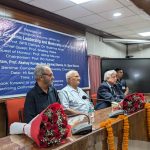
Speaking at the 98th Annual General Meeting of the Federation of Indian Chambers of Commerce and Industry (FICCI) in New Delhi, Goyal said the idea of self-reliance had long been embedded in India’s civilisational thinking, citing the Bhagavad Gita and Mahatma Gandhi’s advocacy of Swadeshi. This principle, he said, continued to guide India’s economic strategy and had been strengthened under Prime Minister Narendra Modi’s Atmanirbhar Bharat vision.
Referring to the recent agreement with EFTA, Goyal said the bloc had committed to invest USD 100 billion in India across innovation and precision manufacturing. He said India offered strong cost competitiveness in research and development, noting that high-quality innovation could be achieved at a fraction of the cost when compared with Europe or the United States. Indian industry, he added, needed to shed “legacy mindsets” and adopt a more globally competitive approach.
Goyal highlighted India’s advantages in innovation and technology, supported by a young demographic, rising digital adoption and a growing talent base. The country’s large pool of STEM graduates and expanding internet access, he said, had created strong potential in applied artificial intelligence, automation, robotics and deep-tech industries. The government’s recently announced USD 12 billion Research, Development and Innovation (RDI) fund, along with support for startups, would further accelerate this momentum.
He also stressed the need to expand skilling programmes to prepare young Indians for future opportunities. Unlike many developed economies with ageing populations, he said, India’s youthful workforce was quick to adopt new technologies and was already highly engaged with digital platforms — a factor he said would position the country strongly in the global technology landscape.
The minister said geopolitical and economic uncertainties had reinforced the need for trusted partners and resilient supply chains. India’s widening network of free-trade agreements and economic partnerships, he added, was aimed at creating long-term cooperation based on transparency and mutual benefit.
Outlining India’s strengths using the PESTLE framework, Goyal said political stability and the government’s “Minimum Government, Maximum Governance” principle had helped boost investor confidence. Economically, initiatives such as the National Manufacturing Mission and a ₹25,000 crore Export Promotion Mission were supporting India’s progress toward becoming the world’s third-largest economy. He said the four Labour Codes would help improve wages and protections, while the Antyodaya approach had helped meet essential needs.
In technology, Goyal pointed to measures including the ₹76,000 crore Semiconductor Mission and a ₹7,000 crore programme for permanent magnet production, which he said would reduce external dependence and strengthen supply chain security. He also cited legal reforms such as progress on Jan Vishwas 3.0 and the proposed Atomic Energy Bill 2025, which aims to open up the nuclear sector and enhance energy sovereignty.
Goyal urged FICCI to adopt a mission-oriented strategy to promote innovation, deepen research and development, and strengthen ties between industry and academia. He said collective effort from industry, government and citizens would be essential for India to become a developed nation by 2047 and emerge as a resilient and competitive global economic power.
Six states sign Rs 15,624-crore pact; Delhi, Haryana and Rajasthan to bear state’s estimated power-component…

Did information allegedly held by Sushant Singh Rajput’s former manager about drug trafficking, child abuse…
New Delhi, September 14 Improving political, diplomatic and military engagement between India and China…
Chandigarh, September 14 Prime Minister Narendra Modi on Monday congratulated the Indian women’s cricket team…