








The North News
Hamirpur, March 13
Thirty-nine people have fallen ill following the spread of jaundice in an area near Hamirpur town of Himachal Pradesh.
The 39 people who have fallen sick include 14 students of a government school in Swahal in Hamirpur district.
Local residents are upset over the spread of jaundice, a water-borne disease, and feel that the situation could worsen if it does not rain timely during the summer season.
According to the Health Department, jaundice cases have been reported from the villages of Swahal, Badu, Mohin, Balih, Majhot, Ropa and Kathal and surrounding areas.
Two patients have been admitted to the Hamirpur Medical College for treatment, while 12 patients are currently undergoing treatment at their home and about 25 patients have recovered.
Hamirpur Block Medical Officer (BMO) Dr Ramesh Ratna on Friday said teams from both the Health and the Jal Shakti Departments have been mobilised in light of the rising number of jaundice cases in the region.
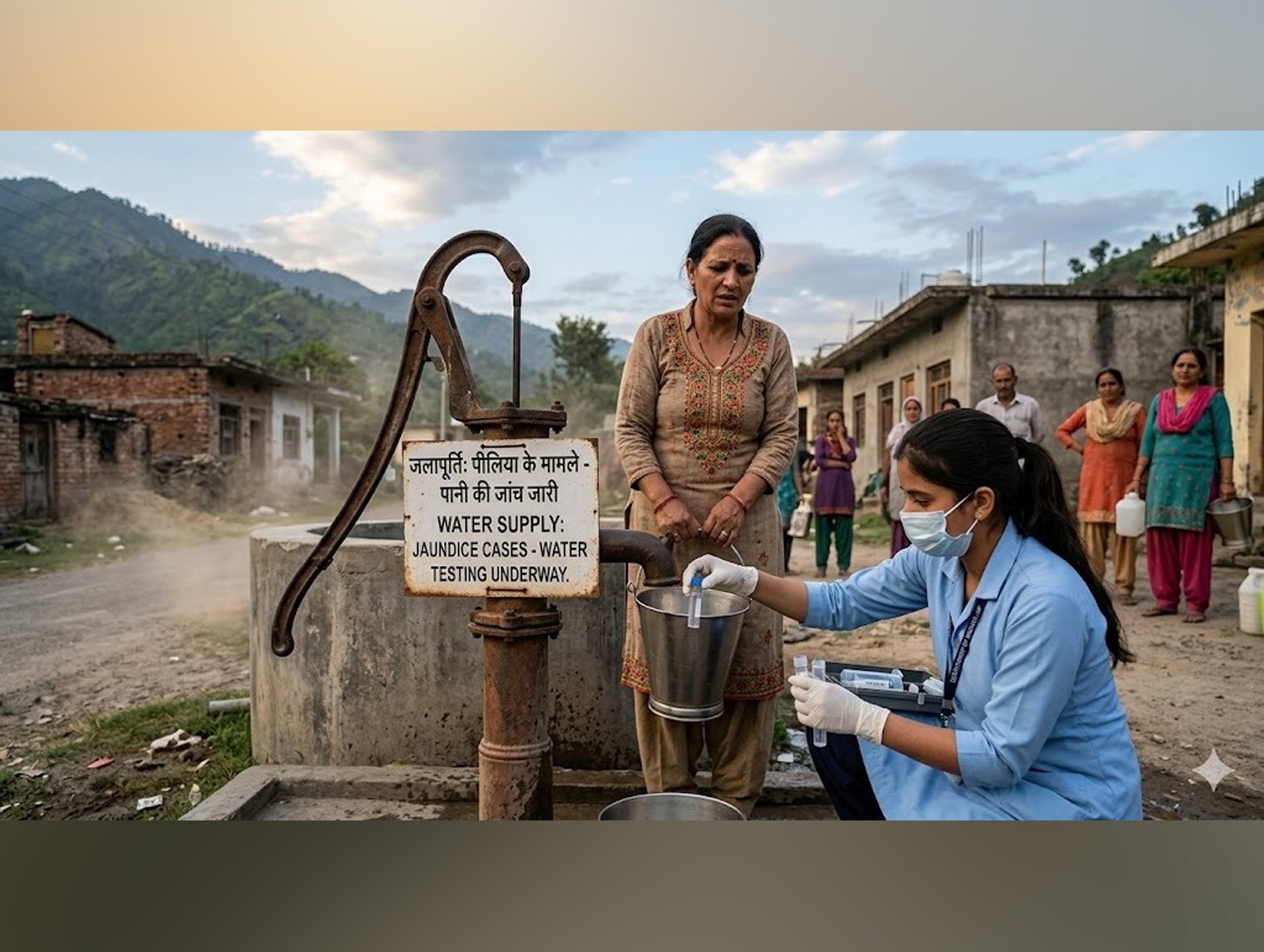
Water samples are being collected daily and residents are being educated on the importance of boiling drinking water as a precautionary measure, he added.
Water samples collected from the source and supply lines of the affected drinking water scheme have been sent for testing and one sample was found to be contaminated in the preliminary tests.
A comprehensive analysis of the water quality is now being conducted. As a precautionary measure, cleaning operations have been initiated within the drinking water scheme infrastructure, and the water supply has been temporarily suspended for a short period, officials said.
Vivek, a local resident, attributed the spread of the disease to contaminated water supplied through the local drinking water scheme. He said that wastewater discharged from factories located in the nearby industrial area is also emerging as a major contributing factor to this problem, which is consequently driving the rise in jaundice cases within the region.
According to local residents, this is not a recent issue and the problem has persisted for several days. The waste discharged by the restaurant, combined with the obstruction of the stream’s flow caused by the bridge construction, has further exacerbated the situation. As a result, more than half-a-dozen neighbouring villages have reported 39 cases of jaundice so far.
Currently, teams from the Health Department are conducting door-to-door visits throughout the area to screen residents for the infection. Additionally, people are being advised to drink boiled water, maintain hygiene and exercise caution. The department is also making chlorine tablets available to help prevent the spread of infection.
Jal Shakti Department Executive Engineer (X-en) Rajesh Garg said that the reports were received regarding the outbreak of jaundice in Swahal and its surrounding areas. Following this, a departmental team visited the site and collected water samples. The causes behind the spread of the disease are currently under investigation.
An appeal has been issued to the public to take necessary precautions. The situation will become clearer once the test reports are received. Appropriate steps will be taken accordingly to curb the spread of the disease in the region, he added.
Meanwhile, the situation near the Baru-Mohin drinking water scheme has deteriorated to such an extent that a pool of contaminated, foul-smelling water has accumulated nearby. Excavation work undertaken during the construction of a bridge in Baru has slowed the flow of the Jamli stream, causing stagnant and filthy water to pool in one spot.
On the other hand, the contaminated wastewater discharged by a prominent restaurant and several nearby industrial units is being released directly into the stream. Residents rue that consequently, stagnant and foul-smelling water has accumulated around the stream, forcing pedestrians and motorists to cover their noses as they pass through the area.
As a precautionary measure, water supply from this scheme has been temporarily suspended.
Moreover, the Jamli Khadd (stream) eventually flows into the Kunah Khadd. Approximately a dozen drinking water schemes operate in the Nadaun region in the vicinity of the Kunah Khad. Consequently, the risk of waterborne diseases spreading has significantly increased due to the contaminated water reaching these areas.
Hamirpur PWD Executive Engineer Deepak Kapil said the water depth at the construction site was significant and, therefore, pipes were installed to ensure proper drainage.
Jal Shakti Department (Hamirpur Division) Executive Engineer Rakesh Garg confirmed that cleaning and chlorination procedures were carried out within the drinking water scheme on Thursday. Silt was also removed from the filter beds. Water supply from this scheme will remain suspended on Friday but is expected to be restored shortly thereafter.